
16 Then Pilate handed Him over to them to be crucified. Therefore the soldiers took charge of Jesus, 17 and carrying His own cross, He went out to what is called “the Place of the Skull” (in Aramaic it is called “Golgotha”).
18 There they crucified Him and two other men with Him – one on each side with Jesus in the middle. 19 Now Pilate also wrote a placard and placed it on the cross. It read: Jesus of Nazareth, the King of the Jews. (John 19:16-19)
Word Focus
nail
ἧλος / hēlos
<Hear It>
placard
τίτλος / titlos
<Hear It>
The word focus this week continues with the theme of Easter and John 19:16-19. According to verse 18, when Jesus reached “the Place of the Skull” he was crucified. None of the four Gospel accounts describe the process of Jesus’ crucifixion in detail – they simply state that he was crucified. Based on historical accounts of crucifixion, there were variations in how it was carried out. One such variation was how the condemned person was fastened to the cross – by ropes, nails, or both. In the case of Jesus we know that nails were used because of the statement of the disciple Thomas after Jesus’ resurrection that is recorded in John 20:25:
So the other disciples were saying to Thomas, “We have seen the Lord!”
But he said to them, “Unless I see the mark from the nails (ἧλος / hēlos) in His hands, and put my finger into the mark from the nails, and put my hand into His side, I will never believe it.”
John also tells us that two men were crucified with Jesus – “one on each side with Jesus in the middle.” Matthew and Mark in their Gospel accounts of the crucifixion, called them “robbers” which is the same word that John used to describe Barabbas (John 18:40), whom Pilate released instead of Jesus. The fact that they were crucified implies they were more than simple thieves. Their robbery probably involved violent activity. The Jewish historian Josephus used the same word to describe the zealots who were attempting to violently overthrow the Roman government of Palestine. So, these two “robbers” may have been insurrectionists captured by the Romans. Interestingly, Mark records that Barabbas “was in prison with the rebels who had committed murder during the uprising” (Mark 15:7). Perhaps Barabbas knew these two men or was associated with them in the uprising.
Another detail that John mentions is that “Pilate also wrote a placard (τίτλος / titlos) and placed it on the cross. It read: Jesus of Nazareth, the King of the Jews”. It was common to post a placard that indicated the reason for punishment. It was also sometimes hung around the neck of the criminal. All four of the Gospels record this detail (Matthew 27:37; Mark 15:26; Luke 23:38; John 19:19-20), and John notes that it was written in three languages: Aramaic – the ordinary language of the local Jewish people; Latin – the official language of the Romans; and Greek – the common international language (see John 19:20). Though the placard would have been customary, Pilate probably used the wording to get revenge and annoy the Jewish leadership that had forced his hand to crucify Jesus: this common criminal was their king. They protested his inscription, but to no avail.
So what did the inscription look like? Here is one possibility.
ישוע נצריא מלכא דיהודיא (Aramaic)
IESVS NAZARENVS REX IVDAEORVM (Latin)
ΙΗϹΟΥϹΝΑΖΩΡΑΙΟϹΒΑϹΙΛΕΥϹΙΟΥΔΑΙΩΝ (Greek)
Regarding the Greek line, it is a string of unbroken characters because Greek was written without spaces between words during the Koine era. Also, sigma is written as Ϲ rather than Σ. The Ϲ form (known as lunate sigma) was used in handwriting because it was easier to write. It probably came into use in the third or second century BC.
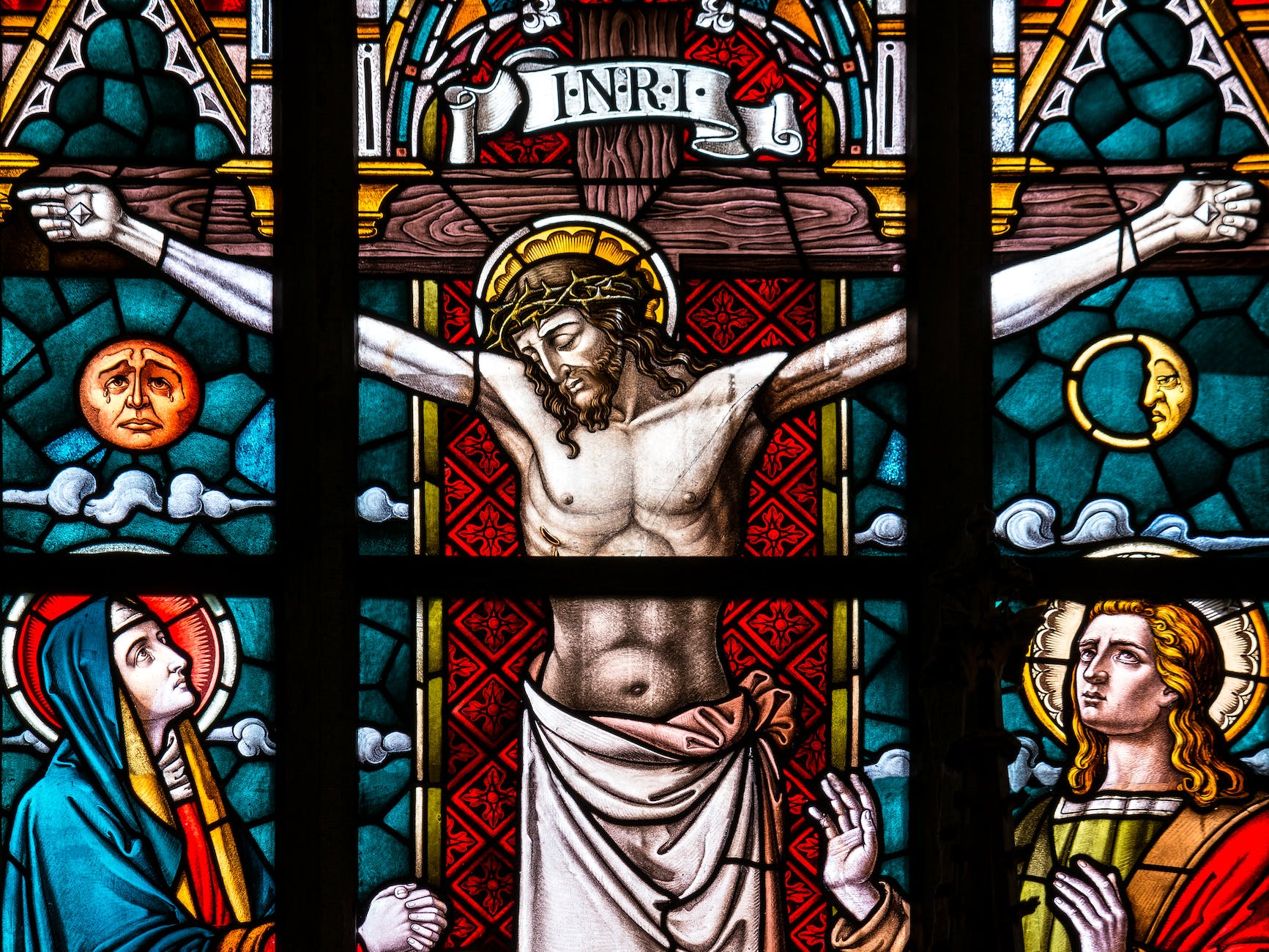
If you look at the image at the top of this post you see that the inscription above the cross is INRI. This initialism is commonly used in religious art and symbolism. It is simply the initial letters of the four words of the Latin inscription.
Click here to see a 12 minute YouTube video in which four language scholars (Hebrew, Aramaic, Latin and Greek) explain the wording of the placard. If you are interested in any of these languages, you may want to subscribe to their two minute daily videos.
Word Focus Lexicon
Lexical Form: ὁ ἧλος ἧλου <Hear It>
Gloss: nail
Part of Speech: Second Declension Masculine Noun
New Testament Frequency: 2
Strong’s Number: G2247 (Link to Blue Letter Bible Lexicon)
Lexical Form: ὁ τίτλος τίτλου <Hear It>
Gloss: placard, inscription, notice (indicating the reason for punishment)
Part of Speech: Second Declension Masculine Noun
New Testament Frequency: 2
Strong’s Number: G5102 (Link to Blue Letter Bible Lexicon)
Unless otherwise noted, English translations of Bible verses are by the author from the Greek text and are not quotations from any copyrighted Bible version or translation.
 Koine Foundations
Leave a comment