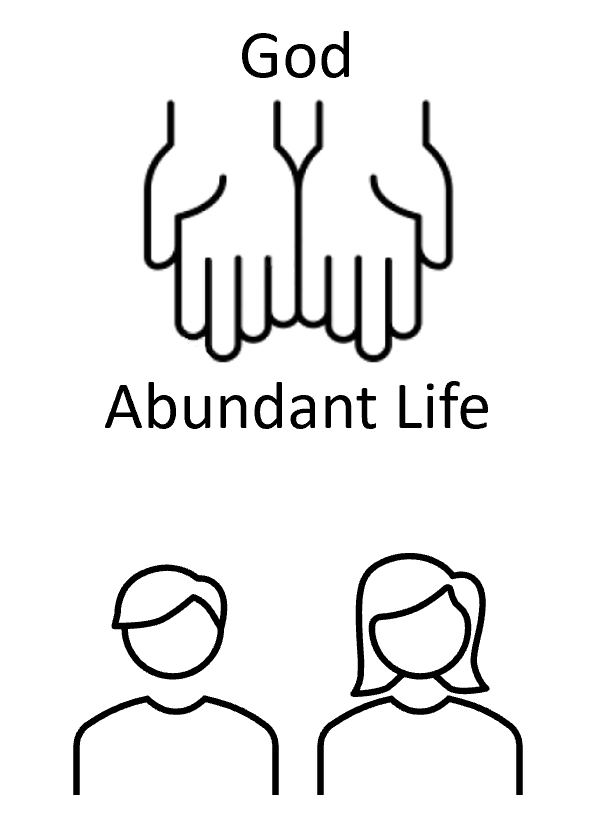
As explained in the previous post, God offers us an abundant life that is eternal, full of joy, free from need, and a life of purpose. As Jesus said:
I came that they may have life and have it abundantly. (John 10:10)
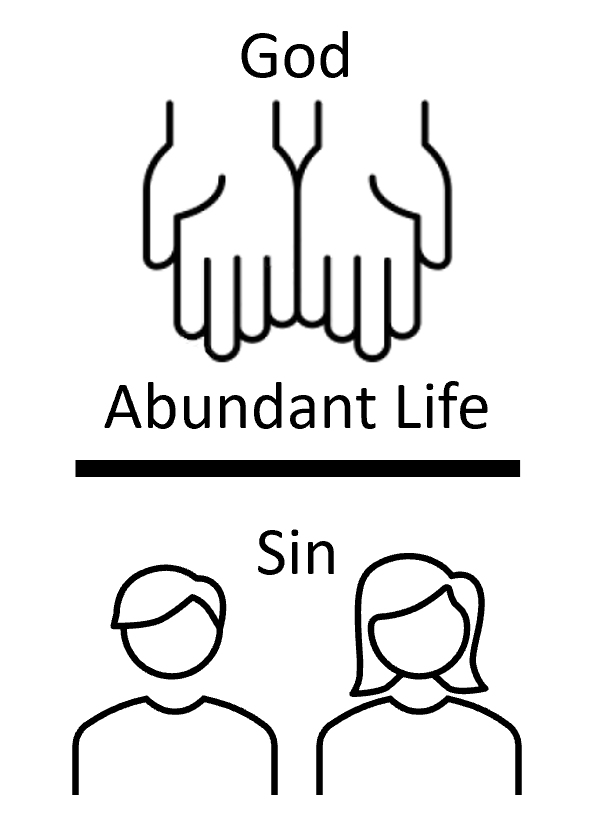
Unfortunately, there is bad news – a serious problem prevents us from receiving this abundant life.
The Bible says that our sins have separated us from God (Isaiah 59:2), and “all have sinned” (Romans 3:23). Sin places a barrier between us and God. It alienates us from God, the only one who can give us the abundant life.
So, what is sin?
Simply stated, sin (ἁμαρτία / hamartia) is to miss the mark or fall short of a standard, to fall short morally or to do wrong. It includes offenses of all kinds from simple errors to heinous crimes. It is any action that deserves punishment.
Because God sets the standards for moral behavior, sin can be defined as failure to be what Gods wants you to be and failure to do what Gods wants you to do.
However, the problem is worse than just being separated from God. The Bible also tells us that:
Wages are what a person earns from the work they do. We earn death from our works of sin.
This is something we know to be true from what we see. We all die. So, no matter how meaningful or happy a person might make their life without God, it is only for a short time. It is not an eternal life. We are all going to die, and that self-made life, no matter how meaningful or happy, will be gone.
Fortunately, there is also some good news, which I will comment on in the next post.
Click here for a PDF document that explains the Good News and consolidates the four posts in this series: Abundant Life, Sin, The Way, Believe.
Word Focus Lexicon
Lexical Form: ἡ ἁμαρτία ἁμαρτίας <Hear It> Gloss: sin Part of Speech: First Declension Feminine Noun New Testament Frequency: 173 Strong’s Number:G266 (Link to Blue Letter Bible Lexicon)
Bibliography
Bromiley, Geoffrey W. (Editor). Theological Dictionary of the New Testament, Abridged in One Volume. William B. Eerdmans Publishing Company. 1985. Dallas Theological Seminary. How to Have a Happy and Meaningful life. Dallas Theological Seminary. 1971, 1978, 2005. Danker, Frederick William (Editor). A Greek-English Lexicon of the New Testament and other Early Christian Literature, Third Edition (BDAG). The University of Chicago Press. 2000. Gilbrant, Thoralf (Editor). The Complete Biblical Library, The New Testament Greek-English Dictionary. The Complete Biblical Library. 1991. Ryrie, Charles C. Basic Theology. Victor Books. 1986.
Unless otherwise noted, English translations of Bible verses are by the author from the Greek text and are not quotations from any copyrighted Bible version or translation.

 Koine Foundations
Leave a comment