
Mature Love is Expressed through Love for One Another
4:19 We love because He first loved us. 4:20 If anyone says, “I love God,” yet hates his fellow believer, he is a liar. For the one who does not love his fellow believer whom he has seen, cannot love the God whom he has not seen. 4:21 And we have this commandment from ˹God through Jesus Christ˺: The one who loves God must also love his fellow believer.
5:1 Everyone who believes that Jesus is the Christ has been born of God, and everyone who loves the father also loves the child born from Him. 5:2 This is how we know that we love the children of God, when we love God and carry out His commandments.
5:3 For this is our love for God, that we keep His commandments. Moreover, His commandments are not burdensome, 5:4 for everyone born of God overcomes the world, and this is the overcoming power that has overcome the world – our faith.
Translation by the author from the SBL Greek New Testament.
Summary of Verses 4:19-5:4
In this unit, John explains that genuine love for God exists only when believers also love fellow believers. Love for others is grounded in love for God by keeping His commandments.
Love for God and love for others are intricately tied together so that it is impossible for them to exist apart from each other, and they confirm the genuineness of each other.
Love for God is demonstrated by doing what God says – keeping His commandments. The commandments of God are not burdensome for the person who truly loves God. Because of faith in Jesus Christ, this person has power to overcome the world.
Click here for a full outline of First John.
Verse 5:1
John continues the topic of love for fellow believers from the previous verse 4:21: “The one who loves God must also love his fellow believer“.
Everyone who believes that Jesus is the Christ has been born of God,
For John, believing is not merely acknowledging that a set of facts is true, but placing faith in a person. John has mentioned the importance of believing in Jesus three times previously in this letter: 2:22-23; 3:23; 4:2.
True belief is evidence that a person has been born of God. For John, there is no other way to be born of God other than through Jesus.
The verb “believes” is in the Present tense in Greek indicating that it is the present state of the believer.
and everyone who loves the father also loves the child born from Him.
Those who are “born of God” are God’s children, as John has mentioned a number of times previously (see 3:1 for example). That makes God their father, and other believers their brothers and sisters. This should lead to a mature love that they express to God the Father (whom they have not seen – verse 4:20), and to their brothers and sisters (fellow believers whom they can see – verse 4:20). Simply stated, those who love God should be identified by their love for other children of God.
Note that the phrase “the child born from Him” is not referring to Jesus, but to the one who believes that Jesus is the Christ.
Verse 5:2
This is how we know that we love the children of God, when we love God and carry out His commandments.
The evidence that the believer loves the children of God (i.e., fellow believers) is by first loving God and doing His commandments. Love for others is grounded in love for God by keeping His commandments. When God is first in priority, others will consequently be loved in the right way. When we fail to love God and carry out His commandments we will fail at loving others.
This is consistent with what Jesus taught that the Old Testament laws, which regulated behavior towards others, are summed up in love for God and others. As Karen Jobes notes in her commentary: “Love for others is not a sentimental emotion or merely getting along; it is living in right relationships with others by not murdering, not stealing, not giving false testimony, and the like, and by meeting the need of others for life’s sustaining provisions”. [JOBES p. 210] Regarding providing provisions, see 1 John 3:17.
This is a circularity in the argument in verses 4:19 to 5:3, but that is because love for God and love for others are intricately tied together:
- It is impossible for them to exist apart from each other.
- Love for God and love for others confirm the genuineness of each other.
- Love for God and love for others reinforce and develop each other.
Verses 5:3
For this is our love for God, that we keep His commandments.
Love for God is demonstrated by doing what God says – keeping His commandments. Love is more than an emotional feelings. The actions and deeds of obedience are visible evidence of love for God.
Moreover, His commandments are not burdensome,
The commandments of God are not burdensome for the person who truly loves God. In fact they bring freedom and liberty. As Karen Jobes notes in her commentary: “When we are set free by Christ to love God, we are free to live rightly with one another as God has defined ‘rightly’. That freedom is light compared to the weight and heaviness of sin”. [JOBES p. 310] What is right is revealed through God’s commandments.
Verses 5:4
for everyone born of God overcomes the world,
For other statements about overcoming, see 1 John 2:13b and 1 John 2:14b (overcoming the Evil One), and 1 John 4:4 (overcoming false prophets).
It is important to see the connection of this verse to 5:1:
- Verse 5:1 states that “everyone who believes that Jesus is the Christ has been born of God“.
- Verse 5:4a states that “everyone born of God overcomes the world“.
- Therefore, everyone who believes that Jesus is the Christ overcomes the world. So, the faith mentioned at the end of this verse is faith based on the truth about Jesus Christ. It is this faith that overcomes the world.
and this is the overcoming power that has overcome the world – our faith.
The new life brought about by believing in Jesus Christ brings to the believer a new power to overcome the world, everything that is opposed to God. The believer can overcome evil with good (see Romans 12:21).
So, God’s commands are also not burdensome (5:3) because of the new power that comes through faith in Jesus Christ.
Greek Note: overcomes / has overcome
John changes the tense of the verb “overcome” from the present tense in the phase, “everyone born of God overcomes the world“, to the aorist tense in the next phrase, “this is the overcoming power that has overcome the world“. David Smith explains in his commentary that by this change in tense John emphasizes in the first occurrence that the fight by the believer to overcome the world is in progress (the battle is ongoing), and in the second occurrence that the triumph is assured . [SMITH p. 194]
Go back to verses 4:19-21
Go forward to verses 5:5-8
Your Personal Study
Read First John 5:5-13 below and answer the questions focused on verses 5:5-8.
5:5 Who then is the one who overcomes the world? None other than the one who believes that Jesus is the Son of God. 5:6 This is the One who came through water and blood – Jesus Christ. Not by the water only, but by the water and by the blood. And the Spirit is the one who bears witness, because the Spirit is the truth. 5:7 There are in fact three witnesses – 5:8 the Spirit, and the water, and the blood, and the three are in agreement.
5:9 If we accept human testimony, then we should accept God’s testimony which is greater. For this is the testimony of God, that He has testified about His Son. 5:10 The one who believes in the son of God has the testimony within himself. The one who does not believe God has made Him a liar, because he has not believed in the testimony that God has testified about His Son.
5:11 And this is the testimony: God gave eternal life to us and this life is in His Son. 5:12 The one who has the Son has this life. The one who does not have the Son of God does not have this life. 5:13 I wrote these things to you, the ones who believe in the name of the Son of God, so that you may know that you have life, eternal life.
1. Who is the one who overcomes the world?
2. What does it mean to believe that Jesus is the Son of God?
3. What do you think “water” and “blood” represent? Scholars have suggested: a) Baptism and Holy Communion. b) Jesus’ Baptism and Death. c) Jesus’ Birth and Death
4. What is the significance of that fact that there are three witnesses?
5. What do the Spirit, the water and the blood agree on?
First John Translation.
First John Translation with Outline and Notes.
Bibliography of source information used for this series of posts.
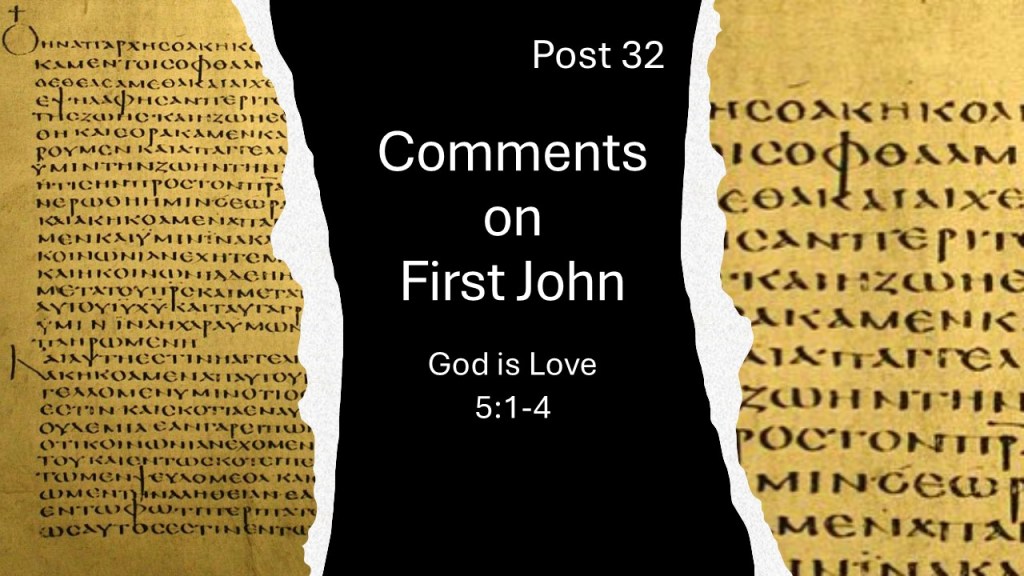
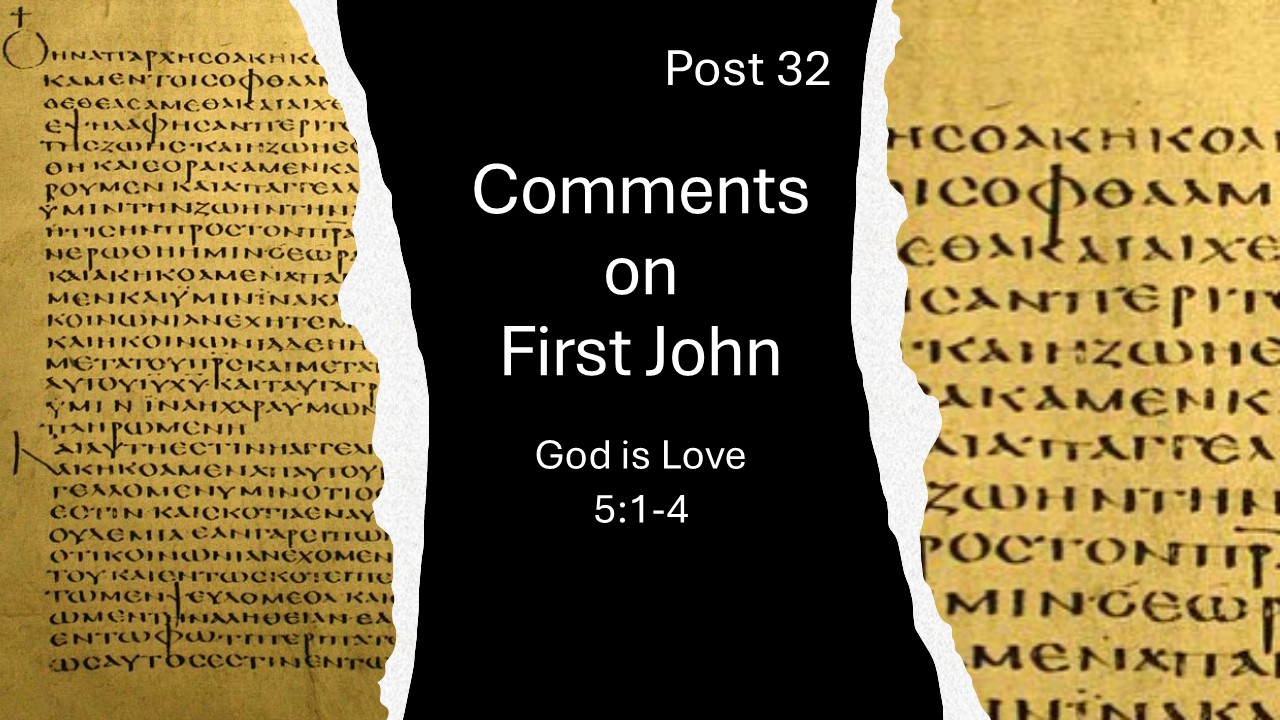
Title Slide Image Credit: First John in Codex Alexandrinus, Public domain, via Wikimedia Commons.
Unless otherwise noted, English translations of Bible verses are by the author from the Greek text and are not quotations from any copyrighted Bible version or translation.
How you can have eternal life.
© Copyright 2022-2024 by Matthew Jones
koinefoundations@gmail.com
 Koine Foundations
Leave a comment