Now this is eternal life, that they may know You, the only real God, and Jesus Christ whom You sent. (John 17:3)
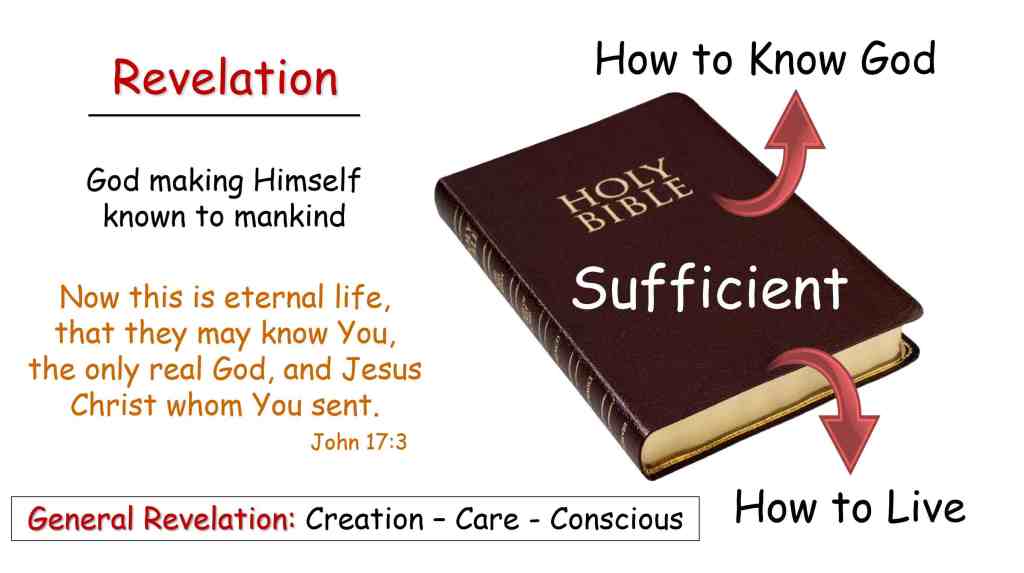
In my prior post I commented that the Bible is our “operator’s manual” from God that is sufficient – it provides all the information for us to know how to know God and how to live. The claim that the Bible is from God implies that God has revealed Himself and His ethical rules for living.
In this post I will comment on the topic of revelation. Stated simply, revelation is God making Himself known to mankind. The God of Christianity is a God who wants us to know Him. He created us to know Him. In fact, Jesus, who revealed God through His life, death, and teachings, gave this as the definition of eternal life. Jesus said:
Now this is eternal life, that they may know You, the only real God, and Jesus Christ whom You sent. (John 17:3)
Jesus states that eternal life is knowing God. He defines the nature of eternal life in terms of a personal relationship.
But, we could not know God, and thus have eternal life, if God did not tell us about Himself. And God tells us about Himself through what theologians call revelation. Theologians and Bible scholars say that there are two avenues of revelation – two ways in which God has revealed Himself – they call these avenues general revelation and special revelation. I will comment on general revelation in this post, and on special revelation in the next post.
General Revelation is the truth that God reveals about Himself through things like His creation, through His care for us, and through our conscience.
It is called general revelation because it is available to everyone, and because it gives general information about God. That is, it makes us aware of His existence and some of His attributes. So, it reveals some truth about God to everyone.
Let’s look briefly at three verses in the New Testament where the Bible teaches about general revelation through creation, care, and conscience.
Revelation through Creation

In the New Testament book of Romans, the Apostle Paul explains that God has revealed Himself through His creation. He writes:
18 For God’s wrath is revealed from heaven against all ungodliness and unrighteousness of people who suppress the truth by their unrighteousness, 19 because what is known about God is evident within them, for God made it evident to them. 20 For ever since the world was created, God’s invisible attributes of His eternal power and divine nature have been clearly seen, being understood through what was made, so that they are without a defense. (Romans 1:18-20)
In this passage, Paul tells us several things about God’s revelation through His creation.
(1) What is revealed is limited to His eternal power and divine nature. The handiwork of creation reveals there is a powerful and intelligent Supreme Being. The intricate design of nature, its irreducible complexity, and the integration of all parts of creation require a designer. Random evolutionary processes could never produce the intricacy, design, and highly integrated organization we observe in the world.
However, creation does not tell us everything about God. In fact, it does not reveal how to know God (i.e., how to be saved). So, by itself what is revealed in creation is not adequate to provide salvation. It is a general revelation.
(2) But what is revealed can be clearly seen, being understood through what God created. That is, it is understood through the eyes of reason.
(3) What is revealed is through what God has created, which is everything. So, God can be seen in everything around us. And every person has had or does have access to it since it was there from the very beginning.
(4) And it leaves people without a defense.
Everyone should recognize from looking at the world around us that a Supreme Being exists. God’s fingerprints are all over creation. But many reject the truth God has revealed, or pervert it, by making idols or worshipping creation itself. Because of this God’s wrath is against those people.
General revelation makes people responsible for knowing the truth. If it is rejected, it brings condemnation.
So, God reveals Himself in a general way through His creation.
Revelation through His Care

Another avenue of general revelation is God’s kind and loving care for us even though we have rebelled against Him.
The Apostle Paul talked about revelation through God’s care when he was preaching to the people in a city named Lystra (located in Asia Minor in an area now known as Turkey). The whole story is recorded in the New Testament in Acts 14. [See verses 5 through 18 for the full account.] In verse 17, Paul comments on God’s care. He says…
And yet God did not leave Himself without evidence, for He did good things such as giving you rains from heaven and fruitful seasons, satisfying with food and your hearts with joy. (Acts 14:17)
Paul’s point here is that God reveals Himself by providing a regular cycle of seasons and food. He takes care of us through the order of His creation as evidence of His existence and His loving care for us. [See also Matthew 5:45.]
Revelation through Conscience
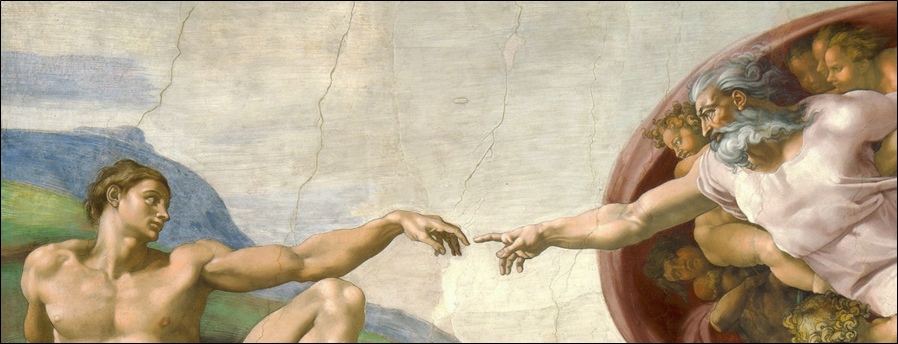
God also reveals Himself in a general way through our moral nature and intelligence. These cannot be produced by random processes of evolution but are explained as the creation of a moral and intelligent God.
The Apostle Paul touches on this in Romans 2:14-15, where he argues:
14 Even Gentiles, who do not have God’s written law, show that they know his law when they instinctively obey it, even without having heard it.
15 They demonstrate that God’s law is written in their hearts, for their own conscience and thoughts either accuse them or tell them they are doing right. (Romans 2:14-15 NLT)
Where does man get his moral nature? Paul argues that it comes from God because man was created in God’s image and God wrote a moral code into man’s heart. We have an intuitional knowledge that there is good and evil. Our conscience acts as an inner monitor, or the voice of God, that passes judgment on our actions based on the moral code written within us (though that moral code can be corrupted or distorted by sin). Even an atheist believes in right and wrong! Though he has no objective basis for it apart from God.
So, general revelation is one avenue God has used to reveal Himself – through His creation, His care for us, and our conscience.
The problem with general revelation is that it doesn’t give us everything we need in order to know God and to know how to live. Another problem is that creation was corrupted by the fall of mankind – by sin. So, we may get wrong ideas of what God is like when we see death, suffering, diseases, and natural disasters. Why these things happen is revealed through special revelation in the Bible. They are the result of sin corrupting God’s good and perfect creation.
But general revelation is sufficient to alert a person to his need for God and to condemn the person who rejects it. General Revelation moves us in the right direction. And God has provided the other avenue of revelation called Special Revelation to completely reveal Himself and the way to salvation. I will comment on this in the next post.
Word Focus Lexicon
Lexical Form: ἀποκάλυψις -εως, ἡ
Transliteration: apokalupsis
Gloss: revelation
Part of Speech: Feminine Noun
New Testament Frequency: 18
Strong’s Number: G602 (Link to Blue Letter Bible Lexicon)
The word ἀποκάλυψις /apokalupsis has the sense of ‘making fully known’. As Frederick Danker notes in his lexicon, it is used in a limited way in the New Testament “only of disclosure implicitly linked with divine plan, purpose, or action”. So it is usually used in the context of God making something known. But in normal secular usage it was used to describe uncovering or disclosing things, such as uncovering one’s head, or disclosing a hidden spring (see LSJ, p. 201).
Bibliography
Danker, Frederick William. The Concise Greek-English Lexicon of the New Testament. The University of Chicago Press, 2009.
Enns, Paul. The Moody Handbook of Theology. Moody Press, 1989.
Ryrie, Charles C. Basic Theology. Moody Publishers, 1986, 1999.
Thiessen, Henry Clarence. Introductory Lectures in Systematic Theology. William B. Eerdmans Publishing Company, 1949.
Unless otherwise noted, English translations of Bible verses are by the author from the Greek text and are not quotations from any copyrighted Bible version or translation.
Scripture quotations marked (NLT) are taken from the Holy Bible, New Living Translation, copyright © 1996, 2004, 2007. Used by permission of Tyndale House Publishers Inc., Carol Stream, Illinois 60188. All rights reserved.
 Koine Foundations
Leave a comment