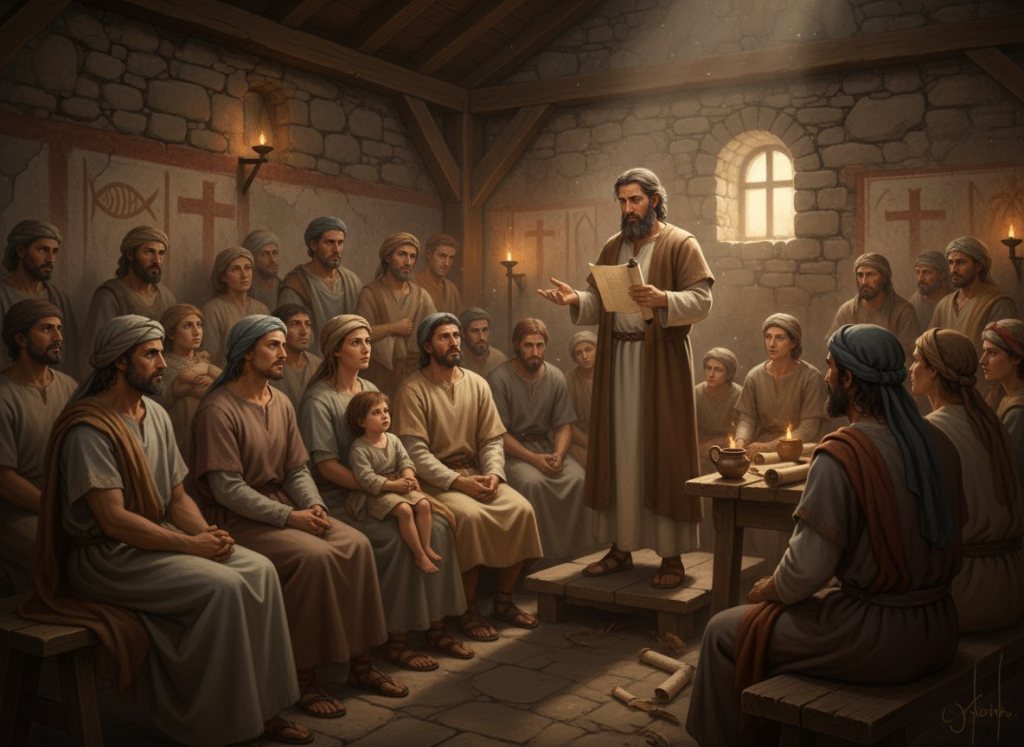
Until I arrive, focus on the public reading of scripture, to exhortation, to teaching. (1 Timothy 4:13)
Introduction
In the previous post I introduced the topic of the New Testament Canon. It is the collection of 27 New Testament books that Christians accept as divinely inspired and thus the authoritative standard for the Christian’s belief and conduct.
You may be wondering who decided and how they decided which books belonged in the canon collection? Why the particular 27 New Testament books in our modern Bibles? Why not 20 or 30? Why only the four gospels of Matthew, Mark, Luke and John?
You see, there were many other books written by Christians in the early years of Christianity. Some were very popular and inspirational like a book entitled The Shepard of Hermas. There were a number of other books that called themselves gospels like the Gospel of Thomas, the Gospel of Peter, the Gospel of Judas, and the Gospel of Mary. Why were none of these included in the New Testament?
As we answer these questions, let’s begin with one very important truth about inspiration, the act whereby God ‘breathed out’ His revelation to the writers of the Bible (see 2 Timothy 3:16 ). Inspiration implies that as the writers penned the words, what they were writing was already inspired. It did not become inspired later because someone or some church council said it was inspired, giving it some kind of authority. Rather, each book of the New Testament was inspired at the time it was written. God gave His books as inspired books.
So, for example, as Paul wrote Romans the words were already inspired as the ink was drying, and Paul knew they were inspired because he was an apostle passing on the Word of God. Did you ever wonder why Paul mentioned that he was an apostle in nearly every letter he wrote? 1 For example:
Paul, a servant of Christ Jesus, called to be an apostle… (Romans 1:1 ESV)
One reason was to remind the readers that as an apostle he was the authorized human author of God’s inspired words. What he wrote had authority because it was inspired.
Romans and the other books Paul wrote are not like any other books. They contain God’s inspired words that have authority to tell us how to know God and how to live because they are God’s revelation breathed out by God and written by Paul who was an apostle – one who was sent out or commissioned by God.
The Apostle John makes the same claim in his book of Revelation where he writes:
The revelation of Jesus Christ, which God gave him to show to his servants the things that must soon take place. He made it known by sending his angel to his servant John… (Revelation 1:1 ESV)
John makes it clear that what he was writing was God’s revelation, thus God’s inspired words. The book did not become inspired later because someone else said it was. The New Testament authors wrote with a consciousness that they were passing along authoritative teaching that was inspired.
So, the process to assemble the 27 books of the New Testament was a process to identify which books were already inspired – inspired at the time they were written. It was not a process to pick and choose from among a bunch of books to select the ones a majority of people liked the most.
In this post and the next, I will comment on how the New Testament Canon was identified from three aspects:
Process: What was the process used to identify the books of the New Testament Canon?
Characteristics: Why are the 27 books we have in our New Testament the right books?
Need: Why was there even a need for a New Testament Canon? After all, the Church already had a Bible – what we now call the Old Testament.
Process (Historical Aspect)
In this post let’s look at the process through which the books of the New Testament Canon were identified. It can be summarized as follows:
(1) First, it is important to note that there was no official church hierarchy that determined the New Testament Canon by carrying out some authorized process.
(2) Rather, the New Testament Canon resulted from the widespread recognition and acceptance over time of the inspired nature of the same books by local churches everywhere.
(3) The process was not instantaneous because Christianity was so widespread. Not every church immediately had every book.
(4) Remember that the New Testament books were written from the middle to the end of the first century. What biblical historians find is that the process started in the first century with a gradually growing collection that began early and relatively quick as the books were written.
(5) The bulk of the collection gained large agreement by the middle of the second century, and certainly well before the end of the second century, although the status of 4 or 5 of the smallest books continued to be debated after that.
(6) The earliest known complete list of the New Testament Canon in its final form with 27 books appears in an Easter Letter written in 367 by Athanasius who was the Bishop of Alexandria. However, the canon had already been finalized long before that.
(7) Finally, in the fourth century the New Testament Canon of 27 books was officially affirmed by Church councils at the Council of Hippo in 393 AD and the subsequent Council of Carthage in 397 AD. However, these councils did not create the canon. They simply formally recognized the list of New Testament books that had already achieved widespread acceptance and use in churches long before that time.
(8) The canon did not change with the Protestant Reformation. In fact, Roman Catholics and Protestants agreed on what was in the New Testament Canon.
Early and Quick
Let’s drill down on the comment in point (4) that the process began early and relatively quick as the books were written.
Evidence in the New Testament Itself
Evidence that the canon collection began early and quick is seen in the New Testament itself that shows that Christians were using New Testament writings as Scripture in the first century shortly after they were written. For example, the book of Second Peter that was written in 63 or 64 AD says:
15 And count the patience of our Lord as salvation, just as our beloved brother Paul also wrote to you according to the wisdom given him, 16 as he does in all his letters when he speaks in them of these matters. There are some things in them that are hard to understand, which the ignorant and unstable twist to their own destruction, as they do the other Scriptures. (2 Peter 3:15-16 ESV)
Note three things from these verses:
(1) Peter refers to letters (plural) that Paul wrote. He is aware of them and knows what is in them, implying he has read them.
(2) He assumes the readers are aware of them, which means they are already in circulation. Paul’s letters were written within 15 years or less from when Peter is writing this, implying quick acceptance of Paul’s letters as authoritative.
(3) Peter refers to Paul’s letters as scripture (see highlighted phrase above). Peter regards Paul’s letters as on par with the Old Testament. Why? Because Paul is an apostle. Paul is still alive or has just been martyred when Peter writes this. So, there is an early recognition that what Paul had written was inspired scripture.
Another verse that shows this early acceptance is 1 Timothy 5:18, where Paul writes…
For the Scripture says, “You shall not muzzle an ox when it treads out the grain,” and, “The laborer deserves his wages.” (1 Timothy 5:18 ESV)
Paul quotes two scripture passages. “You shall not muzzle an ox when it treads out the grain” is from Deuteronomy 25:4 in the Old Testament. The only known match for the second quote, “The laborer deserves his wages”, is found in the Gospel of Luke (10:7). So Paul seems to be quoting Luke’s gospel as scripture, again showing an early recognition of one of the gospels as inspired scripture.
Several places in the New Testament mention the practice of the churches sharing letters (i.e., epistles) written to them. For example, Paul encourages the believers in the city of Colossae:
And when this letter has been read among you, have it also read in the church of the Laodiceans; and see that you also read the letter from Laodicea. (Colossians 4:16 ESV)
As the letters were shared, churches recognized which books were inspired and thus part of the New Testament Canon.
So, there is contemporary, internal confirmation in the New Testament itself that other New Testament books were viewed as Scripture very soon after they were written. This is evidence that the formation the New Testament canon was early and quick, beginning in the first century.
Evidence from Early Quotations of New Testament Books
Evidence that the canon collection began early and quick is also seen by the quotations of the New Testament books in writings by church leaders in the late first and early second centuries, such as Clement, Ignatius, and Polycarp that I mentioned in my previous post. 2 Between them, they quote from at least 22 of the New Testament books, sometimes referring to them as scripture. So, very quickly after the books were written they were recognized and accepted as inspired and part of a growing canon.
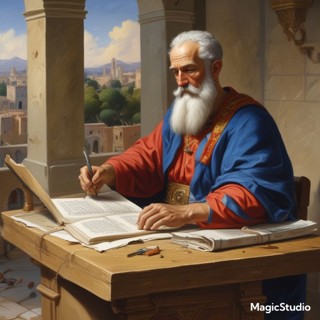
Clement
96 AD
Quotes from 13 books

Ignatius
107 AD
Quotes from 11 books
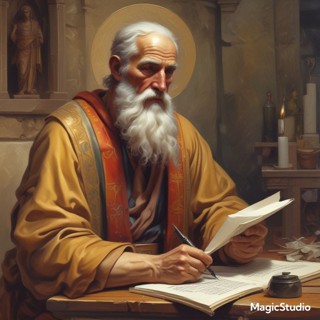
Polycarp
110-120 AD
Quotes from 17 books
The books that became the New Testament canon were read, preached from, and quoted as scripture in the first century and early in the second century not very long after they were written
Manuscript Evidence
Manuscripts are copies of the New Testament books. Manuscript evidence shows that by the middle of the second century, partial collections of what would become the whole New Testament were circulating in bound form. For example, the four gospels were circulating as a bound book, and the writings of Paul were circulating as a bound book. (An entire book containing both collections was not done early on because a single book would have been too large and too expensive to produce.)
Regarding Paul’s collection, it has been argued by scholars that it is entirely plausible that the collection was put together by one of Paul’s associates, such as Timothy, shortly after Paul’s martyrdom. 3
So, by the middle of the second century the bulk of the New Testament (22 or 23 of the 27 books) were recognized as inspired and functioning as Scripture (i.e., 4 Gospels, Acts, the 13 letters of Paul, First Peter, First John, Hebrews, Revelation). They were quoted, read, and preached from. These books were firmly established by the end of the second century. There were continuing discussions over the small books like 2 Peter, 2 John, 3 John, Jude, and James. But many Christians already considered these to be scripture as well, and they were all later recognized as inspired.
In the next post I will comment on the characteristics and need for a New Testament Canon.
Word Focus Lexicon
Lexical Form: κανών -όνος, ὁ
Transliteration: kanōn
Gloss: measuring rod, rule, standard, rule of faith
Part of Speech: Masculine Noun
New Testament Frequency: 4
English Derivatives: canon, canonical, canonize
Strong’s Number: G2583 (Link to Blue Letter Bible Lexicon)
The word κανών / kanōn appears four times in the New Testament but not in the modern sense of the inspired collection of Biblical books, nor in the more general sense of any authoritative collection of works.
In Greek, the word originally meant a straight reed or rod used as a measuring stick. Over time, its meaning expanded to the sense of a rule, standard, or principle for measurement and, by extension, a criterion for correctness (see Galatians 6:16). In early Christian usage it took on the idea of a rule of faith.
A number of English words are derived from the Greek word such as “canon”, “canonical”, and “canonize”.
Notes
1 The only exception is Philippians, a very personal book written to some of Paul’s closest friends.
2 Clement (Bishop of Rome): Wrote a letter now called First Clement to the church in the city of Corinth in 96 AD. The letter was written to address a leadership dispute and call for repentance and humility. There is some evidence that he knew the Apostle Peter and learned from some of the other Disciples of Jesus.
Ignatius (Bishop of Antioch): Wrote seven letters while on his way to martyrdom sometime around 107 AD. He was a disciple of the Apostle John.
Polycarp (Bishop of Smyrna): Wrote a letter now called To the Philippians to the church in the city of Philippi between 110 and 120 AD. The letter encouraged them to remain steadfast in their faith and live according to the gospel. He was a disciple of the Apostle John.
3 Carson, D. A. and Moo, Douglas J. An Introduction to the New Testament. (Grand Rapids: Zondervan, 1992, 2005 by D. A. Carson and Douglas J. Moo.) Page 740.
Bibliography
Beetham, Christopher A., Editor. The Concise New International Dictionary of New Testament Theology and Exegesis. Zondervan Academic, 2021.
Carson, D. A. and Moo, Douglas J. An Introduction to the New Testament. Zondervan, 1992, 2005 by D. A. Carson and Douglas J. Moo.
Danker, Frederick William. The Concise Greek-English Lexicon of the New Testament. The University of Chicago Press, 2009.
Ehrman, Bart D. Misquoting Jesus. HarperOne, 2005 by Bart D. Ehrman.
Enns, Paul. The Moody Handbook of Theology. Moody Press, 1989.
Gilbrant, Thoralf, International Editor. The New Testament Greek-English Dictionary. The Complete Biblical Library, 1990.
Gundry, Robert H. A Survey of the New Testament. Zondervan Publishing House, 1970.
Guthrie, Donald. New Testament Introduction. Inter-Varsity Press, 1970 by The Tyndale Press.
Hixson, Elijah and Gurry, Peter J., Editors. Myths and Mistakes in New Testament Textual Criticism. IVP Academic, 2019 by Elijah Hixson and Peter J. Gurry.
Jones, Timothy Paul. Misquoting Truth. IVP Books, 2007 by Timothy Paul Jones.
Kruger, Dr. Michael. The New Testament Canon, Video Lectures by Dr. Michael Kruger (https://www.ligonier.org/learn/series/new-testament-canon). Ligonier Ministries, https://learn.ligonier.org, 2025.
Kruger, Michael J. The Biblical Canon, An Essay by Michael J. Kruger (https://www.thegospelcoalition.org/essay/the-biblical-canon). The Gospel Coalition, https://www.thegospelcoalition.org, 2025.
Liddell, Henry George and Scott, Robert. A Greek-English Lexicon. Oxford University Press. 1940. With a Supplement, 1996.
Meade, John D. and Gurry, Peter J. Scribes & Scripture. Crossway, 2002 by John D. Meade and Peter J. Gurry.
Ryrie, Charles C. Basic Theology. Moody Publishers, 1986, 1999.
Tenney, Merrill C. New Testament Survey. William B. Eerdmans Publishing Co., 1953, 1961, 1985.
Thiessen, Henry Clarence. Introductory Lectures in Systematic Theology. William B. Eerdmans Publishing Company, 1949.
Vos, Howard F. Beginnings in the New Testament. Moody Press, 1973 by The Moody Bible Institute of Chicago.
Unless otherwise noted as below, English translations of Bible verses are by the author from the Greek text and are not quotations from any copyrighted Bible version or translation.
Scripture quotations marked (ESV) are from the Holy Bible, English Standard Version, copyright © 2001, 2007, 2011, 2016, 2025 by Crossway Bibles, a division of Good News Publishers. Used by permission. All rights reserved.
 Koine Foundations
Leave a comment