
Walking in the Darkness vs. Walking in the Light
1:6 If we say, “We have fellowship with ˹God˺,” and yet are walking in the darkness, then we are lying and not living by the truth. 1:7 But if we walk in the light, as ˹God˺ Himself is in the light, then we have fellowship with one another, and the blood of Jesus His Son cleanses us from every sin.
1:8 If we say, “We have no sin,” then we are deceiving ourselves and the truth is not in us. 1:9 If we confess our sins, because ˹God˺ is faithful and righteous, He forgives us of our sins and cleanses us from all unrighteousness. 1:10 If we say, “We have not sinned,” we make ˹God˺ the liar and His word is not in us.
2:1 My little children, I am writing these things to you so that you do not sin. But if anyone does sin, we have an advocate in the presence of the Father – the righteous Jesus Christ. 2:2 And He is the placater of God’s wrath for our sins, and not only for our sins, but also for the whole world.
2:3 Now the way we know that we know ˹God˺ is if we keep His commandments. 2:4 The one who says, “I know Him,” while not keeping His commandments, is a liar and the truth is not in this person. 2:5 But whoever keeps ˹Christ’s˺ word, truly in this person their love of God has reached a state of maturity. This is how we know that we are in ˹God˺. 2:6 The one who says, “I abide in ˹God˺,” should himself walk in the same way as ˹Jesus˺ walked.
2:7 Beloved, what I am writing to you is not a new commandment, but an old commandment which you have possessed from the beginning. This old commandment is the message which you have heard all along. 2:8 And yet, what I am writing to you is a new commandment. It is truly expressed in ˹Jesus Christ˺ and in you, because the darkness is fading away and the light, the Real Light, is already shining.
2:9 The one who says, “I am in the light,” and yet hates his fellow believer, is still in the darkness. 2:10 The one who loves his fellow believer abides in the light and there is nothing in him to cause others to stumble. 2:11 But the one who hates his fellow believer is in the darkness and is walking in the darkness. He does not know where he is going because the darkness has blinded his eyes.
Translation by the author from the SBL Greek New Testament.
Summary of Verses 1:6-2:11
In the previous post we saw that John presents the Theme Statement for the First Proclamation section in verse 1:5:
1:5 It is this message that we have heard from ˹Jesus Christ˺ and make known to you: God is light. There is no darkness in Him – none whatsoever!
“God is light” is a statement about the nature of God (His holiness) and implies a basis for ethical living. God’s character defines the moral standards for human conduct. See the previous post for more comments on this statement and verse 1:5.
In this next unit, verses 1:6 to 2:11, John addresses the topic of walking in the darkness vs. walking in the light. Those who follow God’s standards have fellowship with God and are described as “walking in the light”. Those who do not follow those standards do not have fellowship with God and are described as “walking in the darkness”. Walking in the light requires a person to deal realistically with sin. Following God’s commandments is evidence that a person is walking in the light, demonstrated by obeying the commandment to love fellow believers.
Structure of Verses 1:6-2:11
Verses 1:6 to 2:11 exhibits a high degree of literary structure. It is built around an inclusio, which is a literary device where similar material is placed at the beginning and ending of a section, creating a bracket or envelope structure. The inclusio material is like the two slices of bread in a sandwich.
The beginning inclusio verses are 1:6-7:
1:6 If we say, “We have fellowship with ˹God˺,” and yet are walking in the darkness, then we are lying and not living by the truth. 1:7 But if we walk in the light, as ˹God˺ Himself is in the light, then we have fellowship with one another, and the blood of Jesus His Son cleanses us from every sin. (1 John 1:6-7)
The ending inclusio verses are 2:9-11:
2:9 The one who says, “I am in the light,” and yet hates his fellow believer, is still in the darkness. 2:10 The one who loves his fellow believer abides in the light and there is nothing in him to cause others to stumble. 2:11 But the one who hates his fellow believer is in the darkness and is walking in the darkness. He does not know where he is going because the darkness has blinded his eyes. (1 John 2:9-11)
Notice the common ideas of walking, light, darkness, and fellowship. Also notice that they both begin with a statement of what someone says.
The verses between the inclusios are organized into two parallel subdivisions with identical elements, connected by a hinge verse (2:3). Each subdivision begins with a false claim and counter (1:8-10 / 2:4-6) and ends with a note of personal encouragement (2:1-2 / 2:7-8).
Click here to open a PDF document that explains and illustrates the structure of verses 1:6 to 2:11 in more detail.
Click here for a full outline of First John.
Verse 1:6
Structure Note
Note the small chiasmus in verses 6 and 7 based on the ideas of fellowship and walking, and the contrasting ideas of darkness and light:
A fellowship with God
B walking in the darkness
Focus: God Himself is in the light
B’ walk in the light
A’ fellowship with one another
If we say, “We have fellowship with ˹God˺,” and yet are walking in the darkness,
In the opening of the inclusio, John begins to counter the claims of the disruptors and make ethical applications. While the statements are probably not the actual quotes of the disruptors, they accurately describe what they believed and taught.
“we” no longer refers to the apostolic eyewitnesses of verses 1:1 to 1:3, but is a rhetorical “we” – anyone who makes the claims or does the things mentioned in verses 1:6 and 1:7. John includes himself with the readers to soften any accusatory tone, while at the same time challenging them to examine how they live. The readers are most likely those who have remained faithful to the truth.
The first false claim is, “we have fellowship with God” while actually walking in the darkness. However, John counters that no one can claim to have fellowship with God (who is light) while intentionally living in a way that is contrary to His character (i.e., walking in darkness – living in an immoral, unethical manner with no divine illumination). If God is light, then those who fellowship with Him will live their lives in a way that reflects His character.
The ordinary word “walk” is commonly used in the New Testament with the idea of “live” in a moral/ethical sense. It implies the idea of a lifestyle.
Greek Note: walking / walk
“walking” and “walk” (περιπατῶμεν / peripatōmen G4043) in verses 1:6 and 1:7 are the Present Active Subjunctive tense form in Greek. The Present tense form marks the action of a verb as progressing, the normal verbal aspect of the Present tense form. Although the activity of walking in the light should be continuous or ongoing for the Christian, the nuance of continuity comes from the semantic sense of “walk” and not its tense form. As Karen Jobes notes in her commentary, the present tense “is sometimes pressed to add the nuance of customary or habitual behavior. However, tense alone cannot bear that weight. Rather, the tense is chosen to be compatible with the semantic sense of the verb in context, which provides the nuance of customary or ongoing behavior. ‘To walk’ as used for an idiom for living is by its nature an ongoing process.” [JOBES p.67]
then we are lying and not living by the truth.
Those who make a claim to have fellowship with God but intentionally live in darkness are lying about their relationship with God. Obviously they are not living in a way that is consistent with what God has revealed in the Bible. God’s truth revealed in the Bible has a moral quality.
“not living by the truth” is a somewhat unusual expression in the Greek that is literally, “not doing the truth” (οὐ ποιοῦμεν τὴν ἀλήθειαν / ou poioumen tēn alētheian). We think in terms of speaking the truth, rather than doing the truth. Doing the truth is living with fidelity or living in a way that is consistent with what the Bible teaches in our thoughts, words and actions. So, “not doing the truth” is living in a way that is not consistent with what the Bible teaches. Truth is not simply something we believe, but also something we do. See John 3:19-21 where Jesus connects doing the truth with coming into the light.
Greek Note: Third Class Condition
In Greek, verse 1:6 is an “if…then” condition clause known as a Third Class Condition, the first of five in verses 1:6, 1:7, 1:8, 1:9 and 1:10. A condition clause consists of two parts – the protasis and the apodosis. The part containing the “if” condition is called the protasis. The part containing the “then” conclusion is called the apodosis. The Greek construction for a Third Class Condition is the particle ἐάν + a subjunctive mood verb in the protasis (the “if” part). By using an “if…then” clause, John makes a hypothetical statement in verse 1:6 based on what he knows the false teachers are actually saying versus how they are living. It functions as a mitigated command – which is defined by CULY (p. XXV) as “a way of softening a command to make it more palatable to the listener/reader. It serves to urge a particular course of action gently rather than demand it.” More directly, John could have written, “Do not claim to have fellowship with God and continue to walk in the darkness.” [For more see MATHEWSON p. 190; CULY p. 14.]
Verse 1:7
But if we walk in the light, as ˹God˺ Himself is in the light,
Verse 1:6 talked about walking in the darkness. Verse 1:7 now focuses on the opposite – walking in the light where God is. It also makes a counter statement against the false claim stated in 1:6.
“as ˹God˺ Himself is in the light” points back to theme statement in verse 1:5 and reminds the reader of God’s character and the source of the light.
then we have fellowship with one another,
There are two results from walking in the light.
(1) “we have fellowship with one another” – This phrase implies both fellowship between God and the believer and fellowship between fellow believers. The readers might have expected John to say that we have fellowship with God, but that is assumed because those who walk in the light do have fellowship with God. However, those who walk in the light also have fellowship with other believers. They have fellowship with one another because they share a common fellowship with God as long as they are walking in the light. Fellowship with God is expressed in fellowship with other believers.
and the blood of Jesus His Son cleanses us from every sin.
(2) “the blood of Jesus His Son cleanses us from every sin” – The blood of Jesus is a way of referring to His death on the cross that paid the penalty for sins and provided forgiveness. It is implied that those who walk in the light do still sin, but God has provided a way to deal with the sin so that fellowship can continue. The light exposes the dark places in our lives, the very things that can separate us from God. We can respond by retreating back into the dark or continue to move forward in the light and willingly confess these sins, As we do this, God cleanses us by the blood of Jesus. This cleansing should result in a change in the way the person lives.
Note that “every sin” can be translated as “every sin” or “all sin“. Nearly all popular English translations translate it as “all sin”. Ultimately, there is not much difference. Every sin adds up to all sin, and all sin includes every sin.
Go back to Verses 1:5
Go forward to Verses 1:8-10
Your Personal Study
Read First John 1:8-10 below and answer the questions.
1:8 If we say, “We have no sin,” then we are deceiving ourselves and the truth is not in us. 1:9 If we confess our sins, because ˹God˺ is faithful and righteous, He forgives us of our sins and cleanses us from all unrighteousness. 1:10 If we say, “We have not sinned,” we make ˹God˺ the liar and His word is not in us.
1. Why might someone claim that they have not sinned?
2. How does saying this make God a liar? What does God’s word say in Romans 3:23?
3. What two things does God do for us when we confess our sins?
4. What two aspects of God’s character are involved in His forgiveness and cleansing?
5. What is the relationship between fellowship with God and walking in the light (v. 1:7), and confession of sins?
6. Do you have sins that you need to confess in order to restore your fellowship with God?
First John Translation.
First John Translation with Outline and Notes.
Bibliography of source information used for this series of posts.
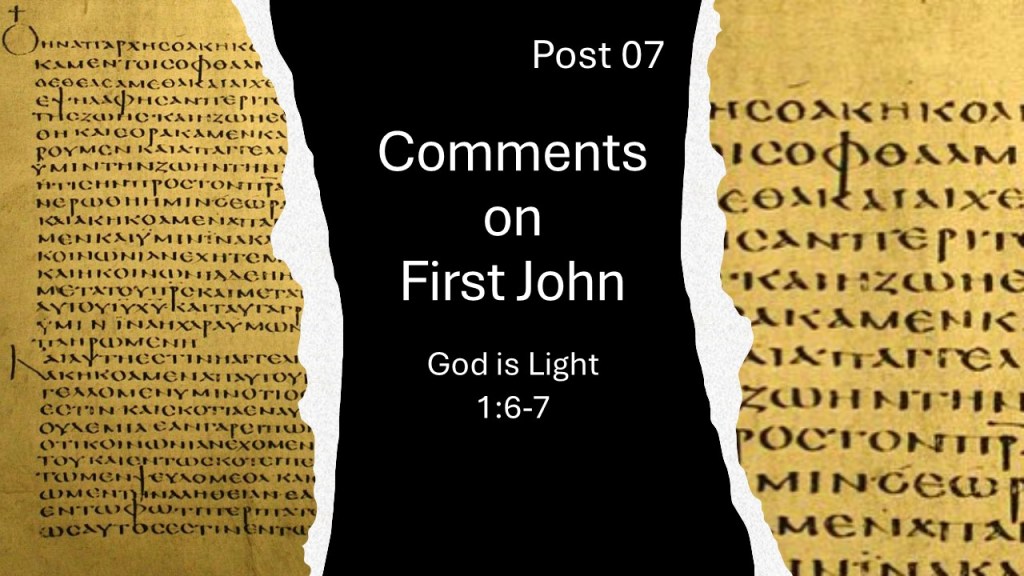
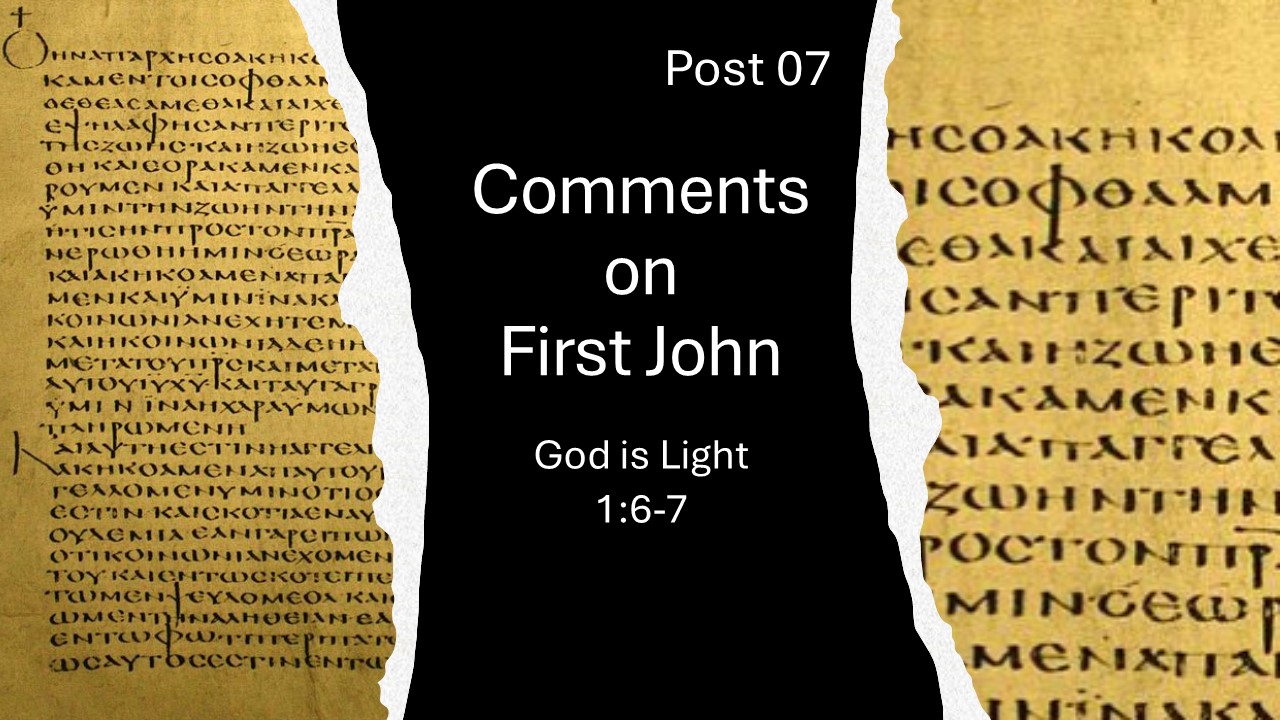
Title Slide Image Credit: First John in Codex Alexandrinus, Public domain, via Wikimedia Commons.
Unless otherwise noted, English translations of Bible verses are by the author from the Greek text and are not quotations from any copyrighted Bible version or translation.
How you can have eternal life.
© Copyright 2022-2024 by Matthew Jones
koinefoundations@gmail.com


Leave a Reply