Learn the Numbers from one to Ten
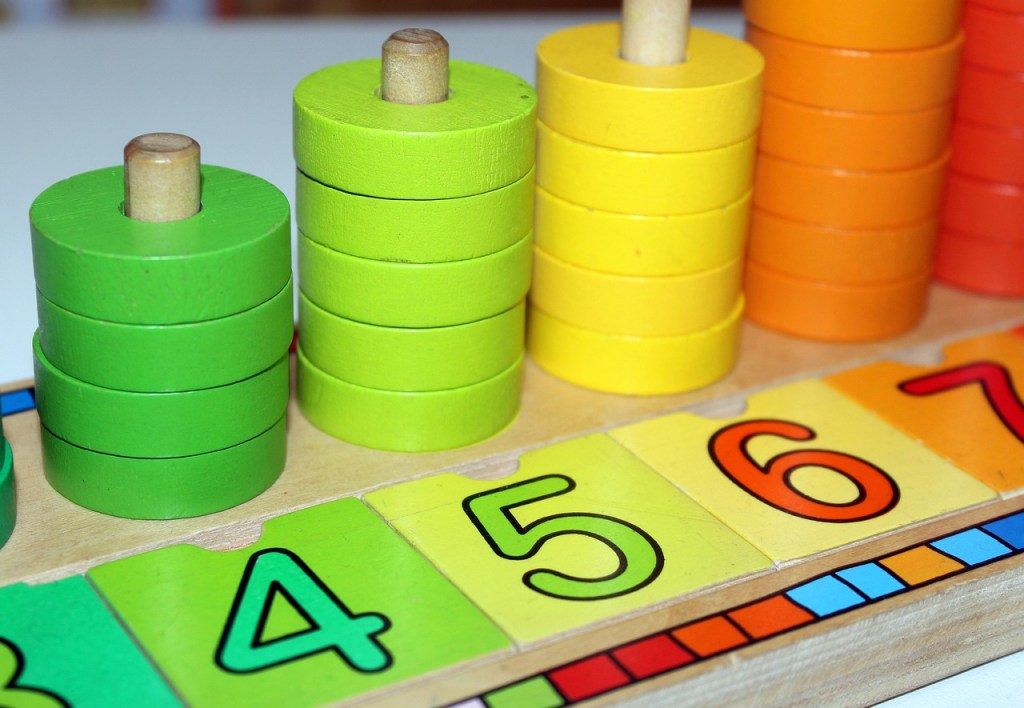
Click here to open a post that lists and pronounces the numbers from one to ten.
Make a TriFold Book of the Fruit of the Spirit
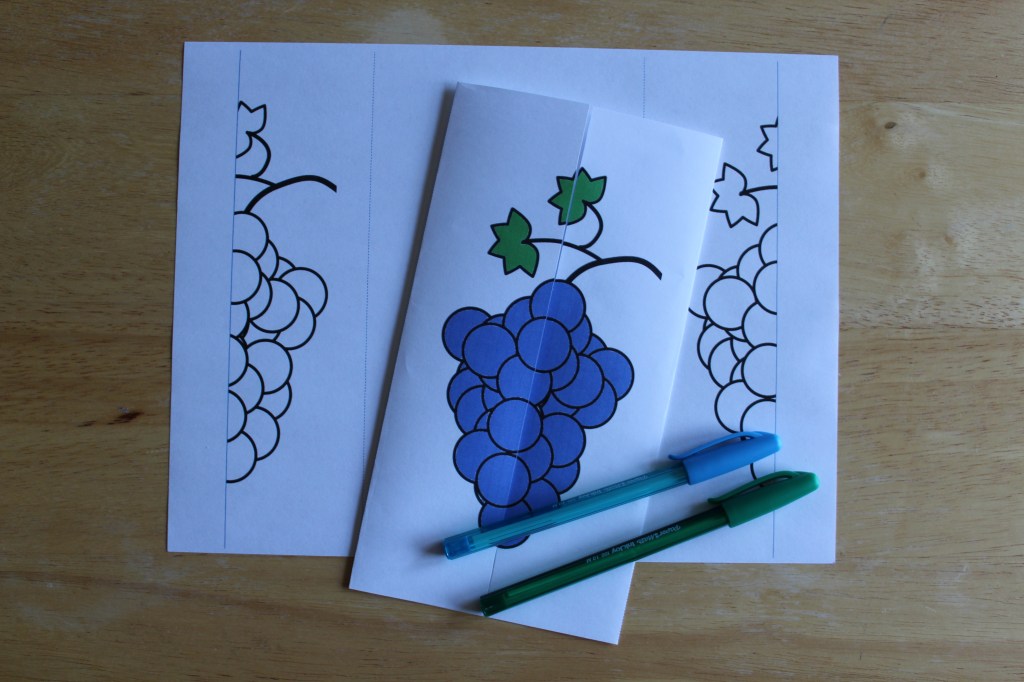
Click here to open and print the PDF trifold master. Cut off the ends of the paper on the solid lines. Fold the paper on the dotted lines to form a grape cluster. Color the grape cluster. Inside the trifold, write the list of the Fruit of the Spirit (Galatians 5:22-23). You can write it in Greek (see below), in your native language, or both.
Be creative. For example, write the Greek words under the left fold. Write the English words under the right fold next to each Greek word. Close the right fold and guess what each Greek word means.
Click here for links to learn about what each word means. You can hear each word pronounced below.
ἀγάπη – love
χαρά – joy
εἰρήνη – peace
μακροθυμία – patience
χρηστότης – kindness
ἀγαθωσύνη – goodness
πίστις – faithfulness
πραΰτης – gentleness
ἐγκράτεια – self-control
Learn the Meaning of the Fish Symbol
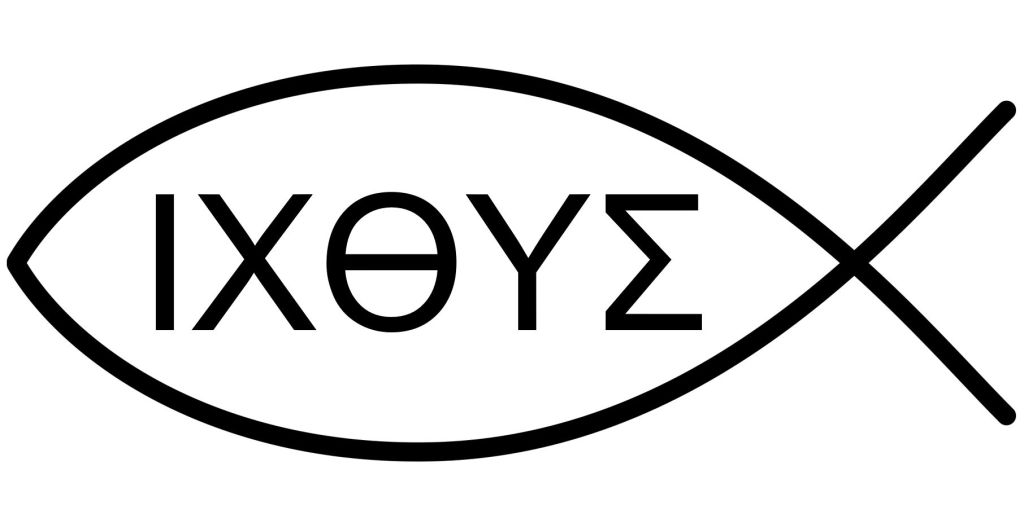
The fish symbol was a secret sign used by persecuted Christians of the first few centuries. The upper-case Greek letters inside the fish symbol spell the Greek word for fish. Click here to open a PDF file that explains the symbol. Click here for even more information and to hear the related words pronounced.
How to Make a Reed Pen

Probably all the original copies of the New Testament Gospels and Epistles were written using a reed pen. It was the most common writing instrument from about the third century until the Middle Ages.
This link is to an excellent and entertaining YouTube video by an artist that explains how to make a reed pen. His pen has a wide tip for art. Your pen should be trimmed to a point for writing.
This activity involves cutting. Children must have adult supervision. You may want to use an X-Acto style knife with a #11 blade rather than a pen knife as shown in the video. If you cannot find suitable reed material growing in your neighborhood, you can probably purchase reeds or bamboo at a local craft store. You can even use a sturdy plastic soda straw. If you include the ink hole, your pen will hold enough ink to write the entire Greek alphabet. Also, don’t forget to purchase black India Ink to test you pen or make you own ink as explained the the How to Make Black Ink craft.
How to Make Black Ink
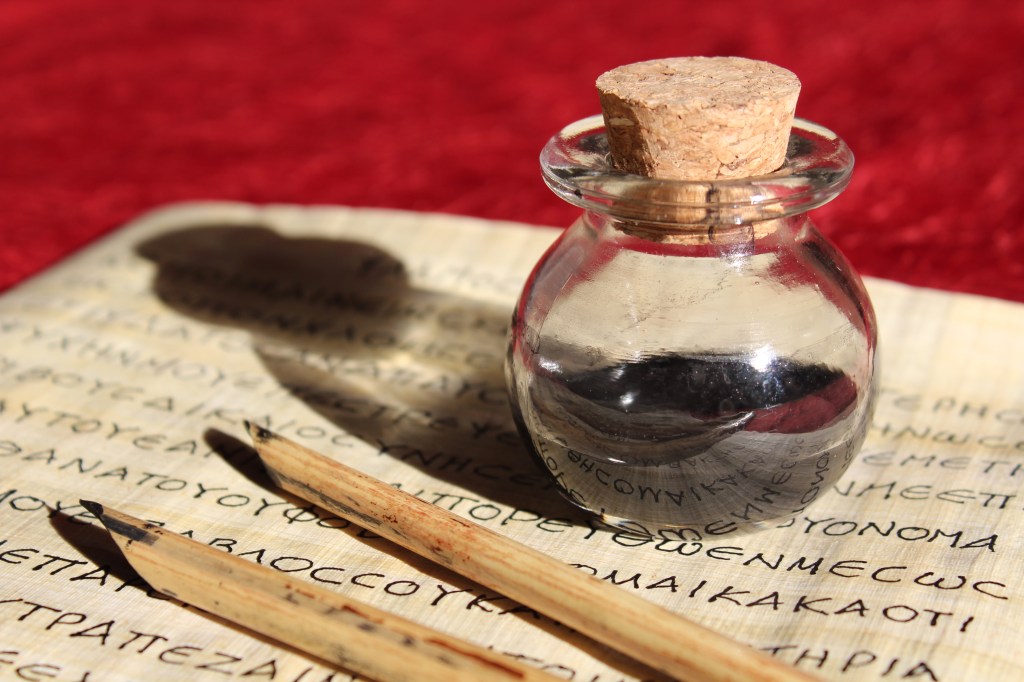
In this activity you will experience what it was like for the average person or scribe to make ink during the time of the New Testament, 2000 years ago. You will use ingredients similar to what they used. Click here for instructions.
Learn How Papyrus Paper is Made
Papyrus paper was the common writing material during the time the New Testament was written. The paper was made from the papyrus plant that grew in shallow water and wet soils. These three brief videos demonstrate how papyrus paper was made.
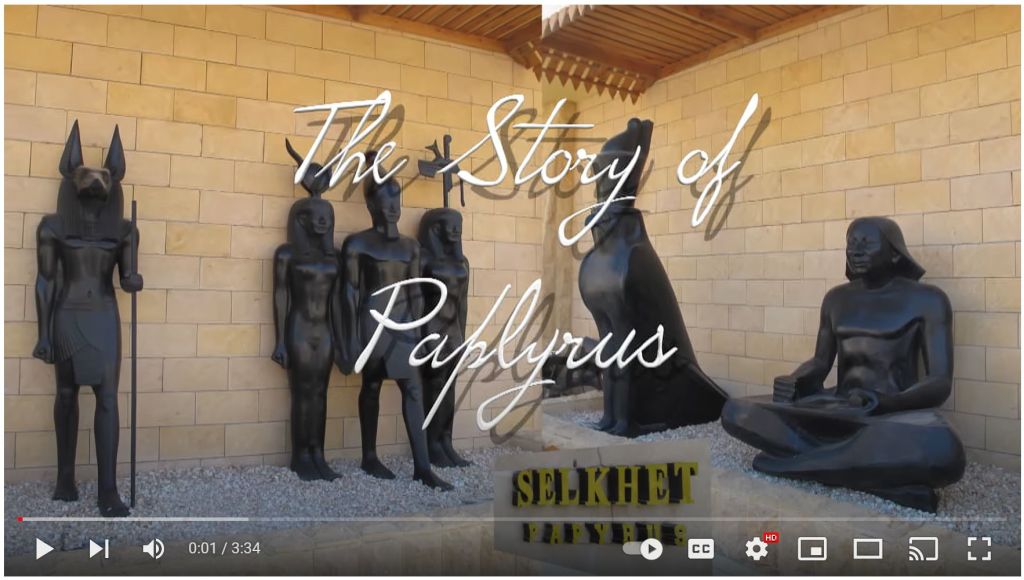
A papyrus paper making demonstration by merchants at the Egypt Papyrus Museum. (3.5 minutes)
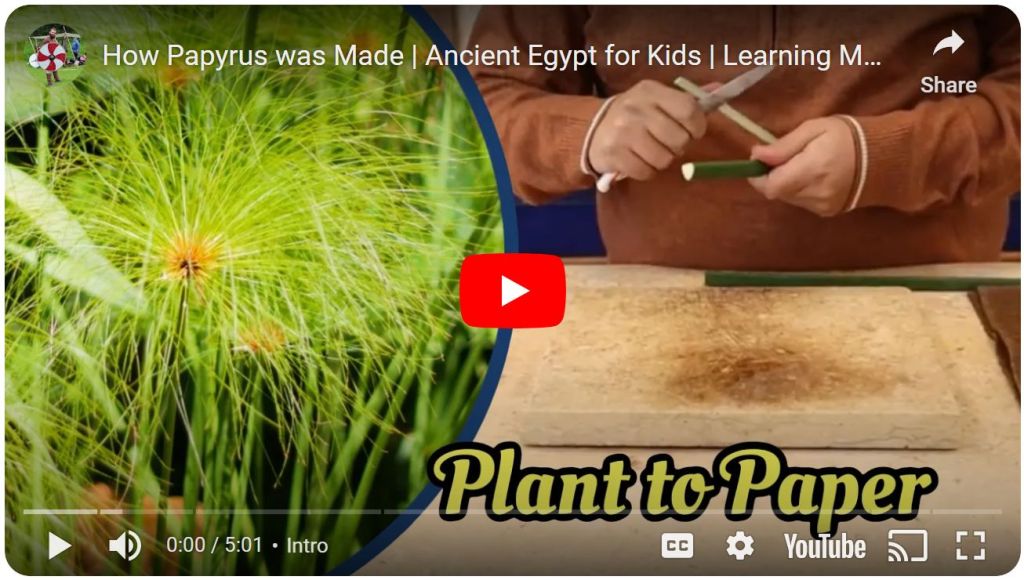
A humorous video about papyrus and how papyrus paper is made by Mr. Bradley – Learning Made Fun. (5 minutes)
A 60 second video demonstration of how to make papyrus paper at home (if you have papyrus plants and the equipment) by Experience Egypt. (60 seconds)
Hear and See the Koine Greek Alphabet
Click on the image to see and hear the Greek Koine Greek alphabet from Alpha to Omega.
Writing Word Picture
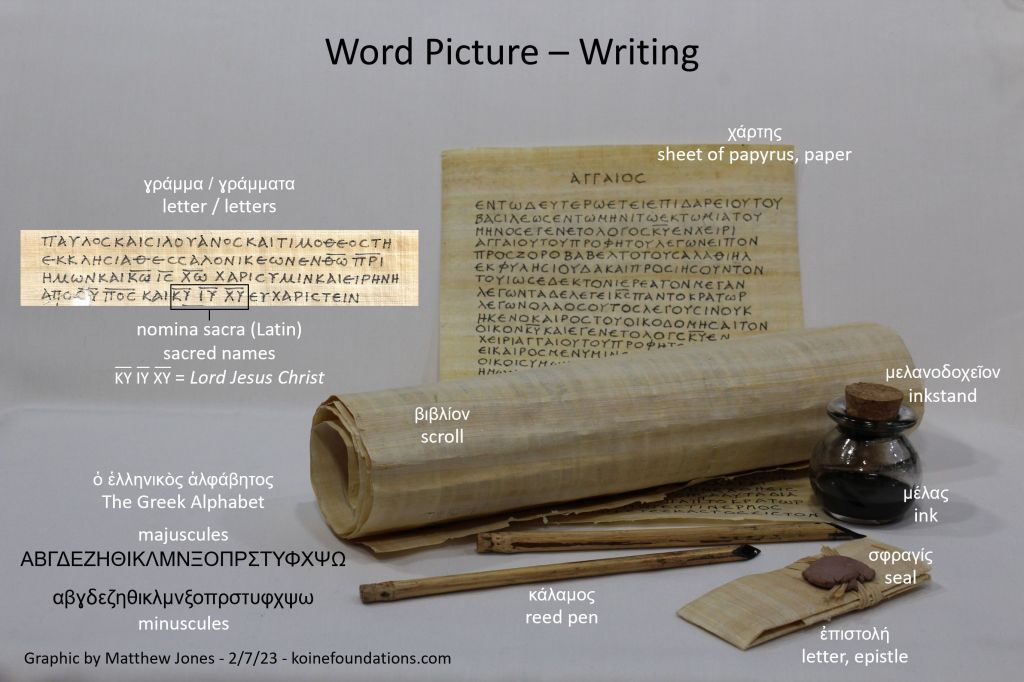
Click here to see common item used for writing during the time of the New Testament and hear their names pronounced.
Learn About the Rhomphaia Sword
The rhomphaia (ῥομφαία) sword is mentioned seven times in the New Testament. Click here to read my post about the Greek word ῥομφαία. The word originally referred to a Thracian weapon (4th century B.C.) with a long straight or slightly curved blade attached to a long handle. By the time of the New Testament the word probably referred to a long sword or broad sword. View the brief YouTube videos below to learn more about the rhomphaia.
Historical Weapons: The Rhomphaia by The Ancient History Guy. An excellent animated video that explains the history and development of the rhomphaia. (4 minutes)

Forged in Fire: The Rhomphaia Tests by The History Channel. Forged in Fire is a competition where blade smiths compete in hand forging historical weapons. The weapons are tested to determine the winner. This extract shows the testing of two rhomphaia swords which will give you a feel for the power of these swords. The video is not rated but I would suggest PG13. The swords are tested on wild boar carcasses which might be disturbing to some viewers. (4.5 minutes)
See Where Jesus Was Crucified
The historical accounts in the New Testament record that the place of Jesus’ crucifixion near Jerusalem was named “the Place of the Skull” (κρανίου τόπος / kraniou topos <Hear It>). It was called “Golgotha” in Aramaic, the language of the Jewish people. The exact location is not known. The topography of Jerusalem has changed significantly since the time of Jesus’ crucifixion roughly 2000 years ago due to building projects, the massive destruction of Jerusalem in 70 AD by the Romans, and various waves of destruction and rebuilding due to war. What is known is that it was located outside the city wall close to a main road. Presently, there are two locations that are claimed to be the site of the crucifixion: (1) the traditional site at the Church of the Holy Sepulchre that was built in the 4th century AD. (2) Gordon’s Calvary which is north of Jerusalem outside the Damascus Gate.
The illustrations below show the location of Golgotha based on the traditional site at the Church of the Holy Sepulchre. Note: The Illustrations are ©2008 by Crossway. All rights reserved. Used by permission. They may not be reproduced, transmitted, or used in any form without permission from the copyright holder.

Click on the image to see it full size. The traditional site of Golgotha is item 8 on the illustration. Gordon’s Calvary is not marked, but would be outside the North Gate (between items 10 and 11 on the illustration).

Click on the image to see it full size. Golgotha is located at the bottom center of the illustration.
Learn About the Inscription Above Jesus’ Cross
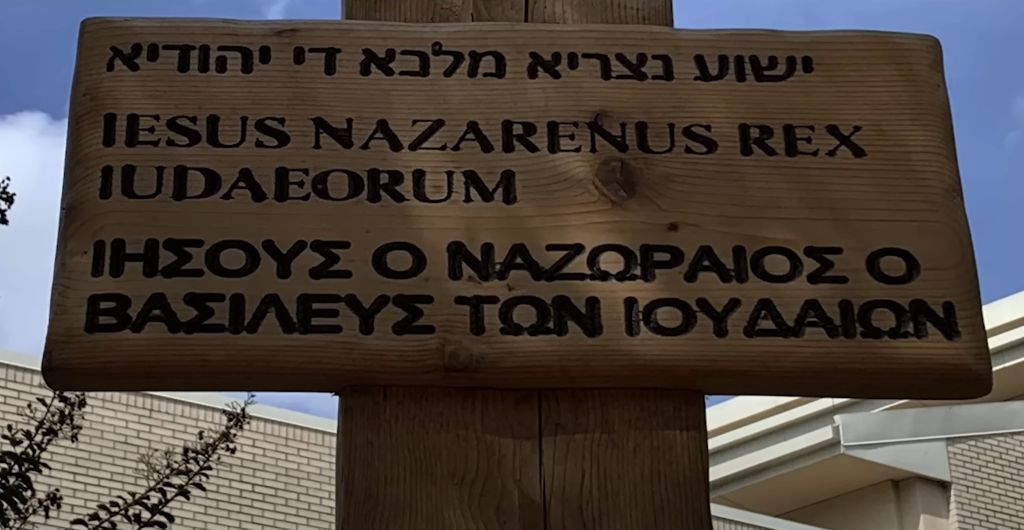
Click on the image to hear a 12 minute YouTube video that features four language scholars (Hebrew, Aramaic, Latin and Greek) who explain the wording of the placard above Jesus’ cross. A presentation by Daily Dose of Greek.
 Koine Foundations
Leave a comment