Resources for Learning Koine Greek (Biblical Greek / New Testament Greek)
Nomina Sacra
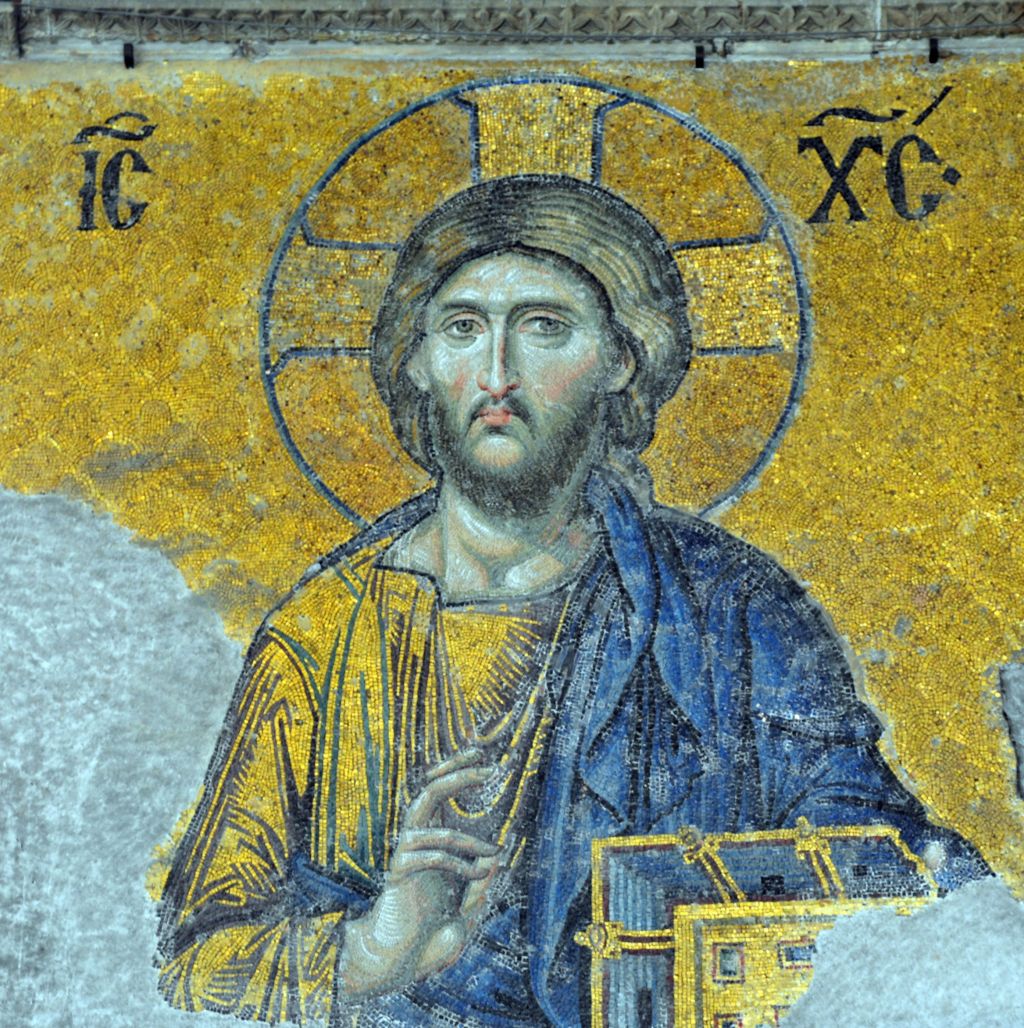
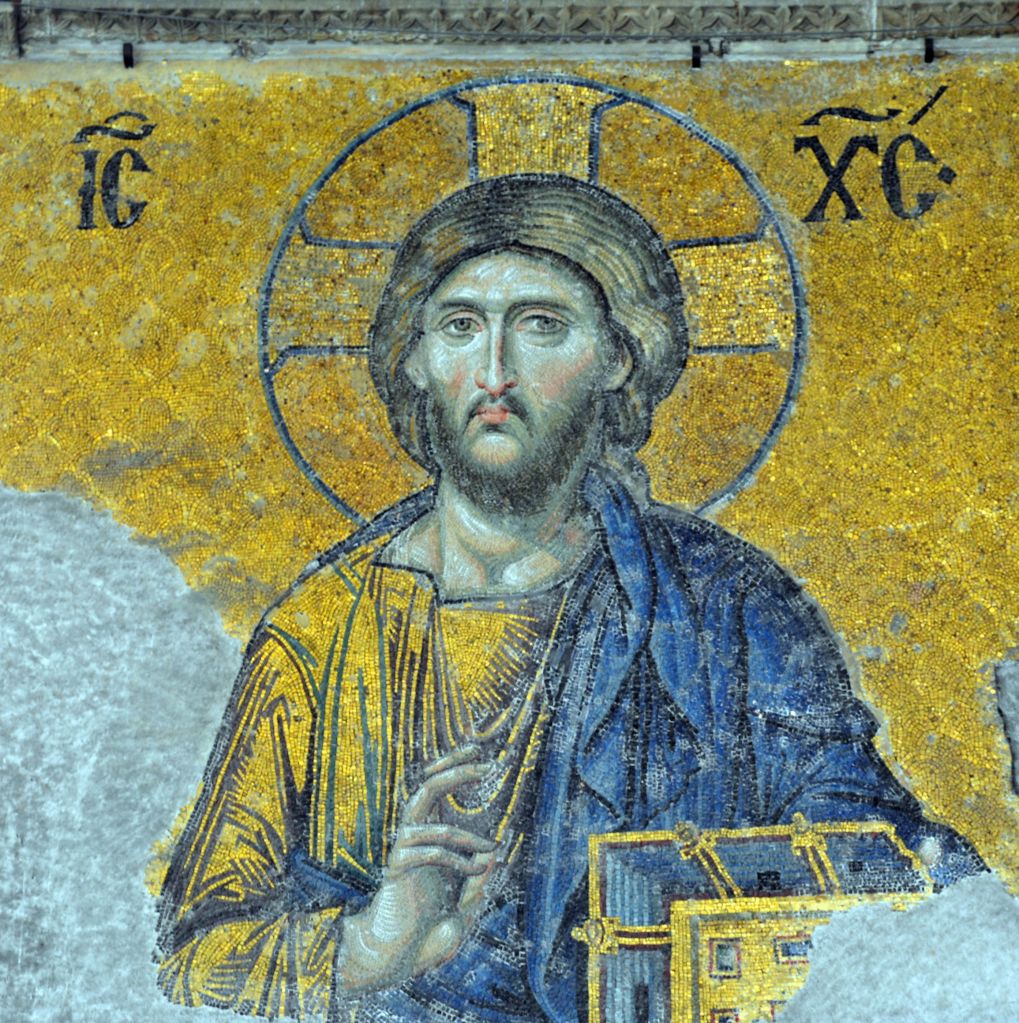
Christ Pantocrator Mosaic. Photo by Zafer on Pexels.com.
You might have seen the above image in a previous post. It is a photo of a mosaic in the Hagia Sophia in Istanbul, Turkey. The Hagia Sophia was originally a church that was first constructed in the fourth century AD and later converted to a mosque during the Ottoman Empire. Click on this link for a very detailed history of the structure in Wikipedia.
The mosaic is called the Christ Pantocrator (Χριστὸς Παντοκράτωρ <Hear It>) which means “Christ Almighty.” The image above is one part of a larger mosaic that depicts Christ flanked by the Virgin Mary and John the Baptist. The mosaic figures are two and a half times larger than life. It dates back to the 13th century. The Hagia Sophia contains a number of mosaics which are considered to be beautiful examples of Byzantine art. Click on this link to see all the mosaics of Hagia Sophia.
What is of interest is what appears to be the letters IC and XC to the left and right of Jesus head. These are nomina sacra, which is Latin for “sacred names.” Nomina sacra (singular, nomen sacrum) are abbreviations of sacred names used in art and Greek manuscripts of the Bible. A nomen sacrum consists of several letters from the original word spanned by an overline. The letters are often the first and last letters of the word. Their use dates to very early in the Christian era, as they are found in manuscripts as early as the second century.
In the image above, ΙϹ (Iota-Sigma) is an abbreviation of the Greek word for Jesus (ΙΗϹΟΥϹ <Hear It>) which begins with Iota and ends with Sigma. ΧϹ (Chi-Sigma) is an abbreviation of the Greek word for Christ (ΧΡΙϹΤΟϹ <Hear It>) which begins with Chi and ends with Sigma. So, ΙϹ ΧϹ means Jesus Christ. If we did this sort of thing in English, Jesus would be JS and Christ would be CT.
IϹ and XϹ are written in upper-case Greek letters. If you know the Greek alphabet, you may be wondering why the upper-case Sigma is written as Ϲ rather than Σ. The Ϲ form (known as lunate sigma) was used in handwriting because it was easier to write. It probably came into use sometime in the early Koine Greek era, perhaps the third or second century BC.
The image below shows what early Greek copies of the New Testament looked like. This is a reproduction of 2 Thessalonians 1:1-2 on papyrus by the author. Notice that there are a several nomina sacra in the second, third and fourth lines of text.
The nomina sacra were used out of reverence and not to save space or time when copying a manuscript. As J. Harold Greenlee notes in his classic textbook, Introduction to New Testament Textual Criticism: “Contraction as a type of abbreviation is distinctly limited to the manuscripts of the Bible and of Christian literature, and is virtually unknown to secular literature” (page 30). Because of who Jesus was, respect and reverence was shown for his name even when simply writing it. Compare that to our culture where it is freely used as a swear word.



Leave a Reply