55 Now the chief priests and the whole council were looking for testimony against Jesus in order to put him to death, but they could not find any. 56 For many were falsely testifying against him, but their testimonies did not agree. 57 Some who appeared were falsely testifying saying, 58 “We heard him saying, ‘I will destroy this temple made by human hands and in three days I will build another not made by human hands.’” 59 But their testimony about this was inconsistent.
60 Then the High Priest stood up in the middle of the council and demanded of Jesus, “Are you not going to answer the testimony of these men against you?” 61 But Jesus remained silent and gave no answer. Again, the High Priest demanded and asked him, “Are you the Christ, the Son of the Blessed One?”
62 Jesus replied, “I am. And you will see the Son of Man sitting at the right hand of Power and coming with the clouds of heaven.” (Mark 14:55-62)
Word Focus
Christ, Messiah
Χριστός / Christos
<Hear It>
Χριστός / Christos means “anointed” and is equivalent to the Hebrew word translated into English as Messiah, which also means “anointed”. Χριστός denotes someone who has been ceremonially anointed for an office or role. In the case of Jesus, Χριστός is the title that designates Him as the Anointed One of God. However, over time the title has come to be used by Christians simply as a name for Jesus, without necessarily referring to this original meaning. It is almost like a last name – Jesus Christ.
The concept of Christ or Messiah has its roots in the Old Testament, but was also shaped by popular belief. In general, it referred to an expected deliverer. Some Jewish people developed this into an expectation of a national deliverer in the mold of King David, who would overthrow Gentile rule and liberate Israel. This was a common expectation in the first century, with the hope of breaking Roman rule. However, the Old Testament concept is of an expected deliverer whom God would use to work out His plan of salvation. Perhaps because of the popular idea of the Christ being a national political deliverer, Jesus seldom applied this title to Himself to avoid misunderstanding.
For example, the key verses above record one of the few times when Jesus did refer to Himself as the Christ. The scene is His trial on the night before His crucifixion. The religious leaders wanted to put Him to death but could not find consistent testimony against Him as grounds for the death penalty. Out of frustration, the High Priest challenged Jesus directly with the question, “Are you the Christ?” Jesus replied, “I am.” But He immediately went on to speak of Himself as the Son of Man, rather than dwelling on the Christ aspect. The religious leaders were looking for a christ who was a national deliverer, but Jesus’ mission as Christ was to suffer, die, and rise again to deliver sinful people from the curse of death.
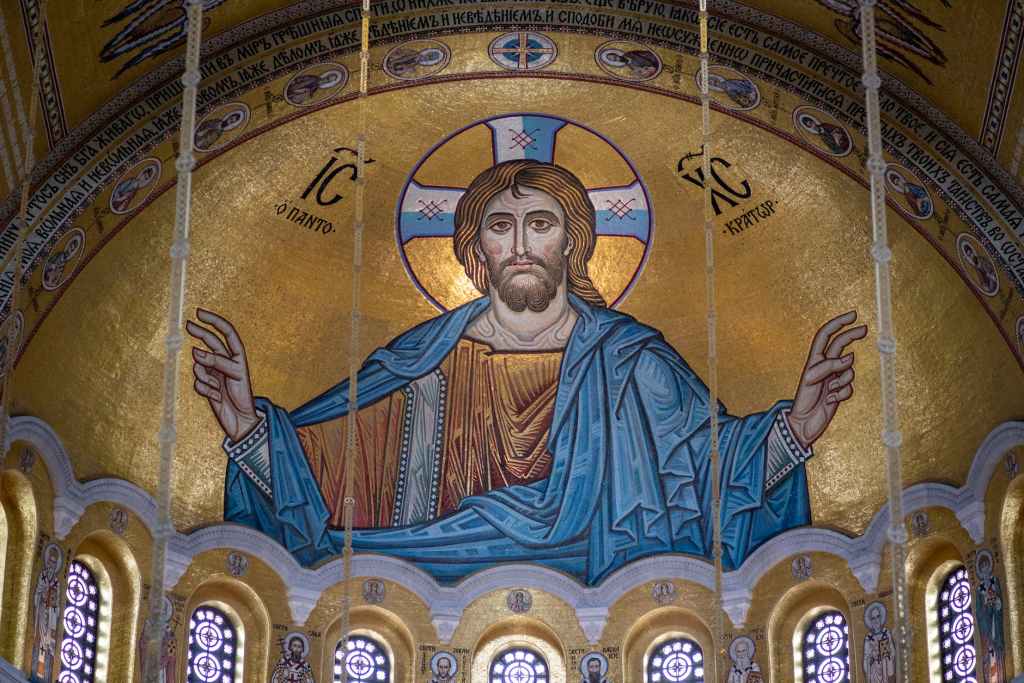
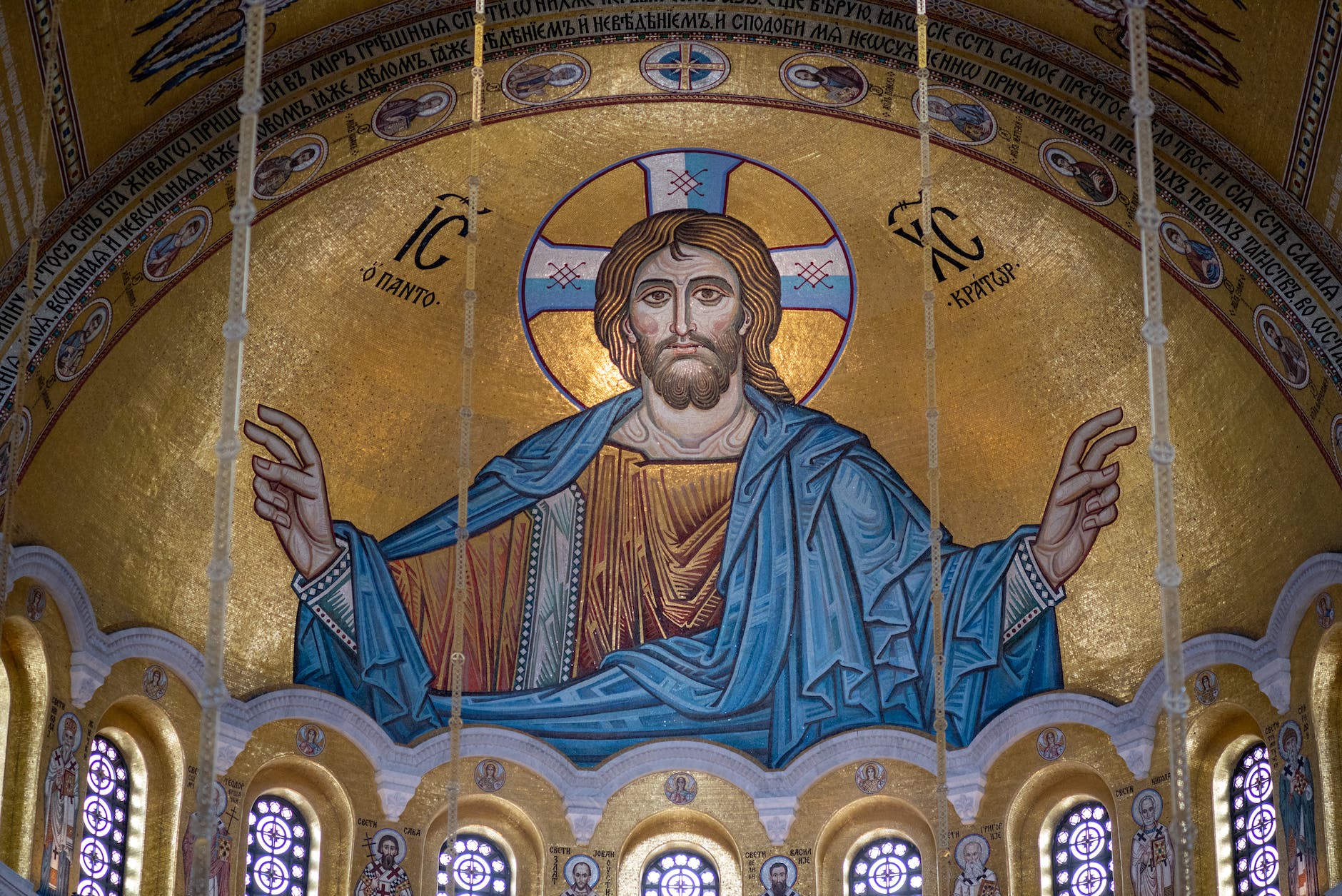
Note: In the image above, the Greek Letters IC (Iota-Sigma) and XC (Chi-Sigma) to the left and right of Jesus head are nomina sacra, which is Latin for “sacred names.” Nomina sacra are abbreviations of sacred names that are used in art and Greek manuscripts of the Bible. They consist of several letters from the original word spanned by an overline (in this instance a ~). The letters are often the first and last letters of the Greek word. Their use dates to very early in the Christian era, as they are found in manuscripts as early as the second century.
In the image above, IC (Iota-Sigma) is an abbreviation of the Greek word for Jesus (IHCOYC / IESOUS <Hear It>) which begins with Iota and ends with Sigma. XC (Chi-Sigma) is an abbreviation of the Greek word for Christ (XPICTOC / CHRISTOS <Hear It>) which begins with Chi and ends with Sigma. So, IC XC mean Jesus Christ. See the prior post about Nomina Sacra for a fuller explanation.
Word Focus Lexicon
Lexical Form: ὁ Χριστός Χριστοῦ <Hear It>
Gloss: Christ, Messiah, the Anointed One
Part of Speech: Second Declension Masculine Noun
New Testament Frequency: 529
Strong’s Number: G5547 (Link to Blue Letter Bible Lexicon)
Unless otherwise noted, English translations of Bible verses are by the author from the Greek text and are not quotations from any copyrighted Bible version or translation.
 Koine Foundations
Leave a comment