
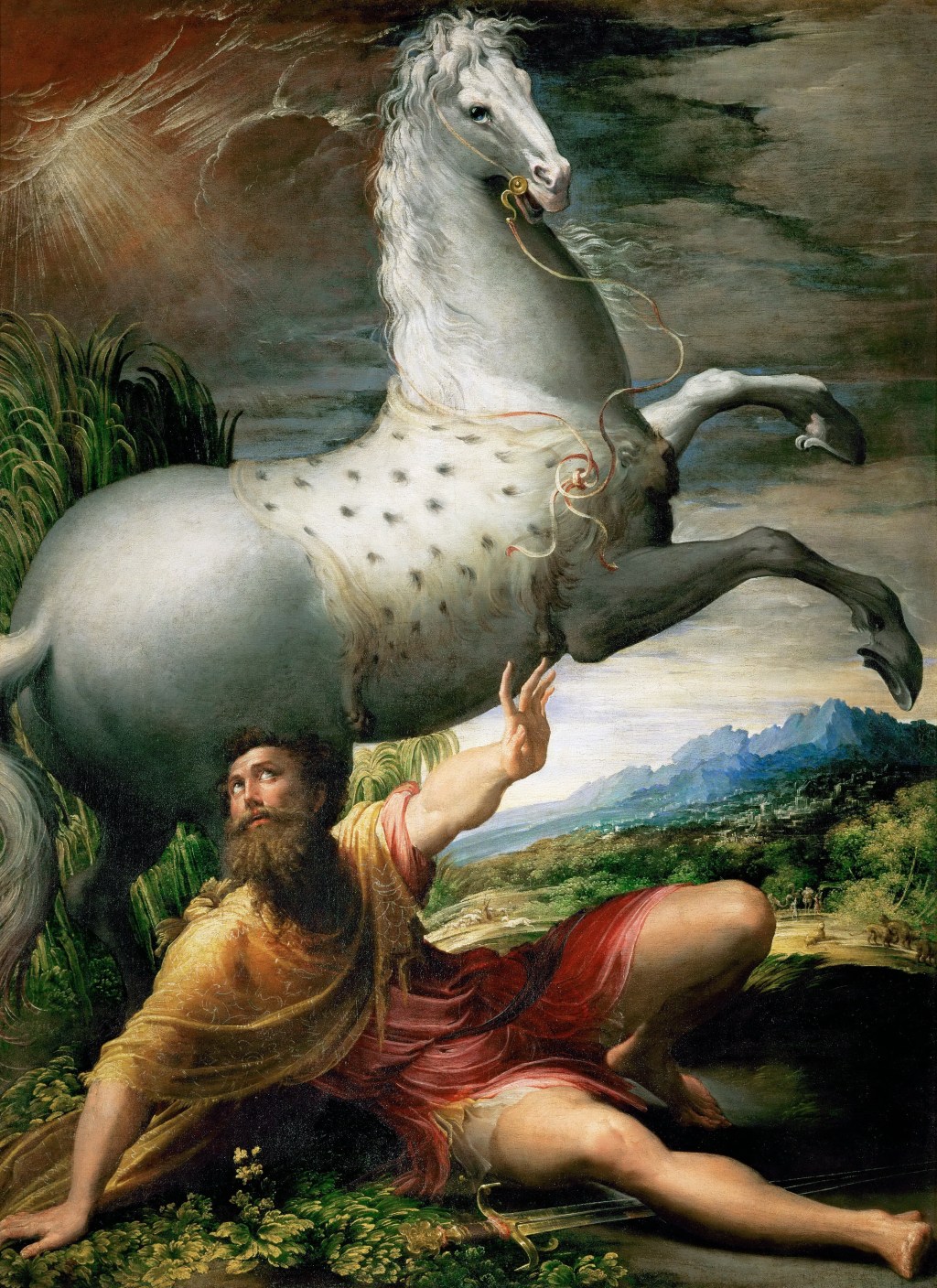
After falling to the ground, he heard a voice saying to him, “Saul, Saul, why are you persecuting me?”
And Saul asked, “Who are you, Lord?”
He replied, “I am Jesus, whom you are persecuting.”
(Acts 9:4-5 TBA)
Introduction
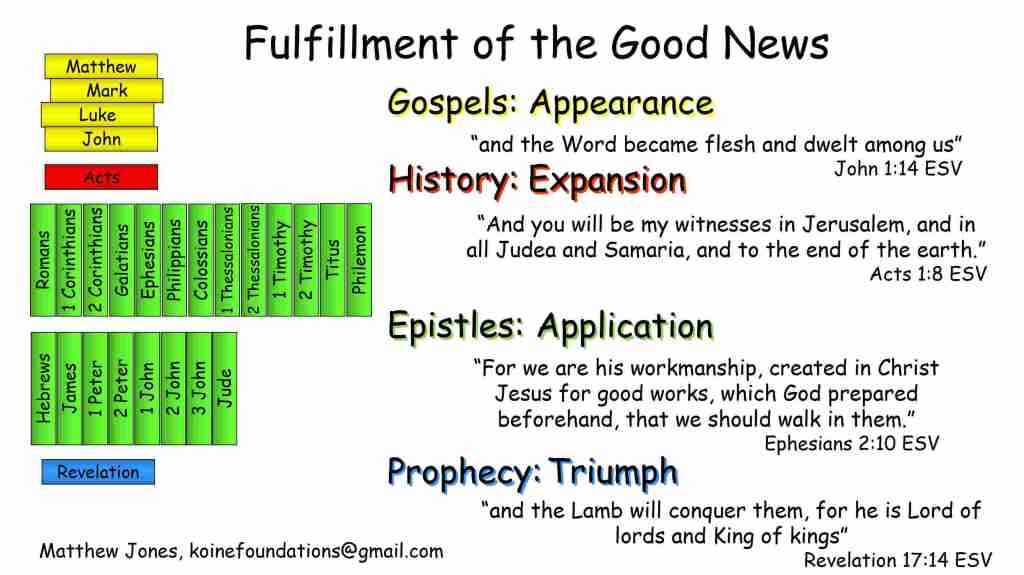
In the previous three posts I commented on the Gospels (Introduction, Matthew and Luke, Mark and John). They stand first in the New Testament and announce the APPEARANCE of the Good News – Jesus Christ. They describe His birth, life, ministry, death, and resurrection. They also record His teachings.
The Gospels are followed by the book of Acts, a history of the early Christian church, that continues the story where the Gospels leave off. Specifically, Acts is a sequel to the Gospel of Luke written by the same author (Luke) to the same person (Theophilus), probably not long after the Gospel of Luke was written.
Acts describes the EXPANSION of the Good News to the whole world as Christians obeyed Jesus’ command to be witnesses to the ends of the earth.
A number of other New Testament books that were written by Paul fit into the events recorded in Acts. So, I will walk through Acts pointing out the major events and showing where these other New Testament books fit in.
Paul’s books are part of a larger grouping of 21 books called Epistles. They are the books from Romans through Jude (green on above illustration). The first group (Romans to Philemon) were written by Paul, and the second group (Hebrews to Jude) were written by several other authors. These Epistles explain the APPLICATION of the Good News to how believers should live – how the Good News affects our thoughts, words, and actions.
As a sequel to the Gospels, Acts reports the expansion of the Good News from its birthplace in Jerusalem to the world. The history in Acts covers a period of about 30 years from the Ascension of Christ (30 AD) up to Paul’s house arrest in Rome awaiting trial (60 to 62 AD).
Luke, A First-Rank Historian
Like the Gospel of Luke, the book of Acts is a researched and historically based, orderly account. Some of it is written as an eyewitness account because the author Luke travelled with Paul on some of his mission trips and saw and recorded what happened firsthand.
Luke is regarded as a first-rank historian, in both His Gospel and in Acts. Many archaeological discoveries have confirmed Luke’s historical accuracy of the events, places and people he writes about. One of the great archaeologists of the 19th and early 20th centuries was Sir William Ramsay. He devoted 15 years of his life attempting to undermine Luke’s credibility as a historian, and to refute the reliability of the New Testament. He finally concluded:
Luke is a historian of the first rank; not merely are his statements of fact trustworthy, he is possessed of the true historic sense… In short this author should be placed along with the very greatest of historians.
Sir William Ramsey. The Bearing of Recent Discovery on the Trustworthiness of the New Testament, 1953, page 80.
Let’s look at just one example of many that illustrates this.
When Luke reports on the travels of Paul and his co-workers, he sometimes describes the local government officials that Paul came into contact with. Luke records a wide range of different specific titles for these officials such as praetors in Philippi, the first man of Malta for a man name Publius, asiarchs who governed Ephesus, and politarchs for the men on the city council of Thessalonica. What is remarkable is that each of these specific titles has turned out to be exactly right for the time and place Luke writes about as confirmed by history or archaeology. This is evidence that he accurately recorded events he witnessed in his own lifetime.
Luke gets all of the titles correct. Even titles which were previously unknown by modern scholarship and thought to be wrong, have been proven to be correct by archaeology. One example of this is the title politarch which Luke uses for the city officials in the city of Thessalonica. In Acts 17:6-8 Luke writes:
6 And when they could not find them, they dragged Jason and some of the brothers before the city authorities [πολιτάρχας / politarchas], shouting, “These men who have turned the world upside down have come here also, 7 and Jason has received them, and they are all acting against the decrees of Caesar, saying that there is another king, Jesus.” 8 And the people and the city authorities were disturbed when they heard these things. (Acts 17:6-8 ESV)
Note that modern English versions translate the original Greek word πολιτάρχας / politarchas as “city authorities” or “city officials”.
For many years, historians and critics of the Bible accused Luke of being wrong with this title because there was absolutely no known use of the word ‘politarch’ anywhere in Greek literature. It had never been found. There was supposedly no such word. They assumed Luke got it wrong or made up the word.
That is, until 1835 when this marble stone was uncovered in Thessalonica that lists the names of six politarchs and their title ΠΟΛΙΤΑΡΧΟΥ inscribed in upper case letters (outlined in photo).
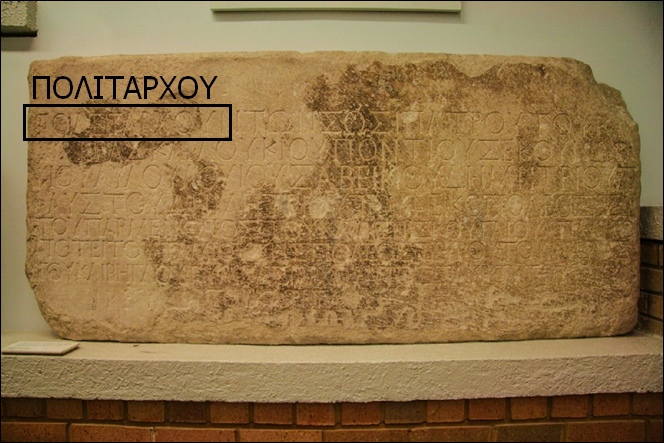
The stone was once part of an arch that spanned a road. It is now in the British museum. The title politarch has since been found in 35 inscriptions, many from Thessalonica and dating to the time written about by Luke in the book of Acts. So, Luke did know what he was writing about! He should. He was there.
Additional archaeological discoveries have confirmed that Luke’s many titles for government officials are dead on. This demonstrates that he was a first-rate historian and an eyewitness of what he records because these government positions were constantly changing because of the constantly changing political climate. Yet he records them correctly for all the times and localities about which he is writing. This should give us confidence in what we read in the New Testament.
Walking Through Acts
As I mentioned above, Acts continues the story of the expansion of the Good News, picking up where the Gospels leave off. A number of the other New Testament books fit into the events recorded in Acts. As I comment on the major events in Acts I will explain where these other books fit into the action.
Acts Chapter 1: The Great Commission (30 AD)
The four Gospels end with the resurrection of Jesus and Acts picks up the story from there. For forty days after His resurrection, Jesus appeared alive to various groups of believers. Shortly before His ascension into heaven, Jesus commanded the believers to remain in Jerusalem until they had received the Holy Spirit and He gave them this command known as the Great Commission:
But you will receive power when the Holy Spirit has come upon you, and you will be my witnesses in Jerusalem and in all Judea and Samaria, and to the end of the earth. (Acts 1:8 ESV)
The fact that I am writing this in my post two thousand years after Jesus said it, on the other side of the world, is proof that what began in this passage has had an extraordinary influence on the world. 1
Jesus does not require political power, or legal power, or military power to achieve his purpose. He simply seeks people, like you and I, willing to suffer and persuade in the power of the Holy Spirit. 2
Behind this success is the activity of the Holy Spirit, to which Luke repeatedly gives credit in Acts. Because of the emphasis on the Holy Spirit, some have suggested that this book should be called the “Acts of the Holy Spirit”. The Good News advanced because God was working through His Holy Spirit in human history for the salvation of all people.
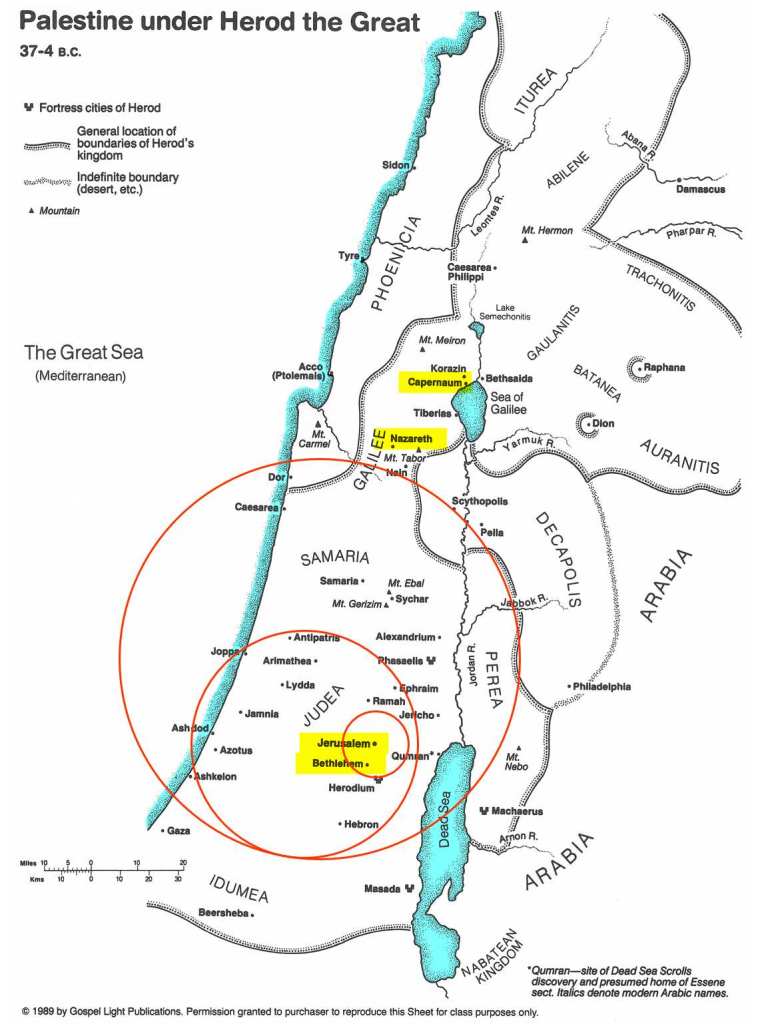
This command provides a rough outline for the book of Acts:
| Chapters | Good News Destination | Date |
|---|---|---|
| 1 to 7 | Throughout Jerusalem and Judea | 30-32 AD |
| 8 to 12 | Throughout Samaria and outlying regions | 32-47 AD |
| 13 to 28 | Throughout the world | 47-62 AD |
Acts is also organized around two main characters:
| Chapters | Character Focus | Date |
|---|---|---|
| 1 to 12 | Peter spreads the Good News to Jews | 30-47 AD |
| 13 to 28 | Paul spreads the Good News to Gentiles | 47-62 AD |
Acts Chapter 2: Pentecost (30 AD)
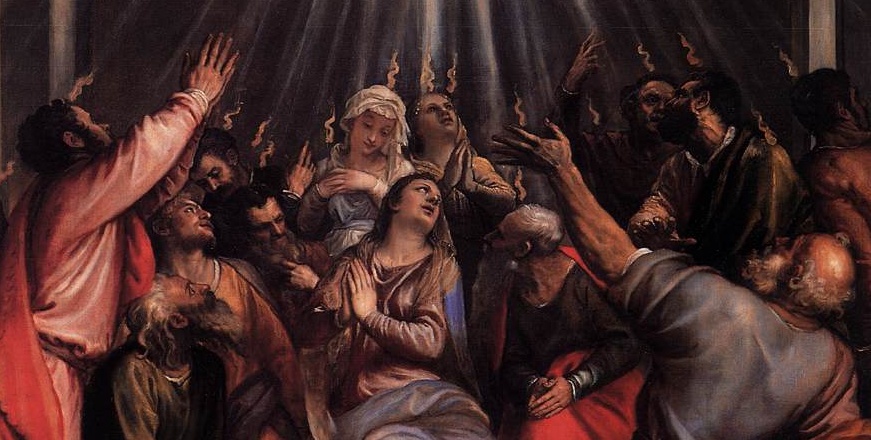
Ten days after Jesus’ ascension, on the Jewish holiday of Pentecost, the believers who had gathered in Jerusalem were filled with the Holy Spirit.
Luke’s description of the event is this:
3 And divided tongues as of fire appeared to them and rested on each one of them. 4 And they were all filled with the Holy Spirit and began to speak in other tongues as the Spirit gave them utterance (Acts 2:3-4 ESV).
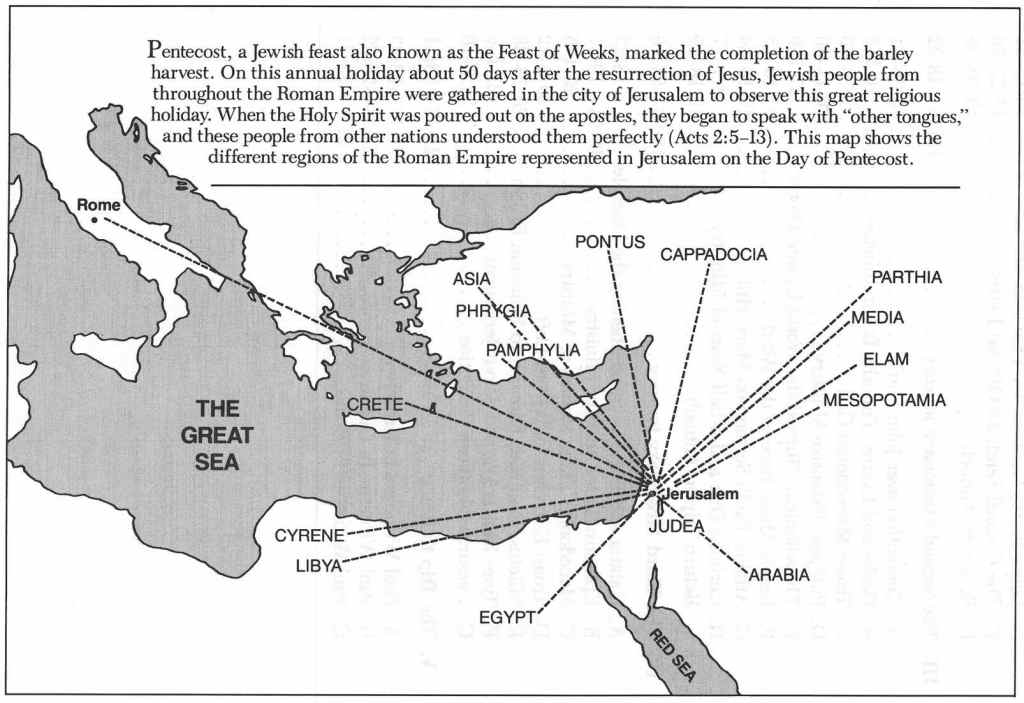
When the Holy Spirit was poured out on the believers they began to speak in other human languages and many people from other nations understood them perfectly. Empowered with the Holy Spirit, Peter proclaimed the Good News and 3000 were saved in one day (Acts 2:41).
Verses 2:9-11 list the various people groups and nations that were present to hear his preaching. They are shown on the map below. Clearly, even here at the beginning, the Good News was already going out to the world.
Acts Chapter 4: Opposition (30-32 AD)
The church grew rapidly in Jerusalem, but not without opposition from the Jewish religious leaders. Peter, John and other apostles were arrested in an attempt to stop them from witnessing (4:1-31, 5:17-42). But in spite of this, the Good News continued to spread rapidly.
Acts 6-8: Persecution & Progress / Stephen Stoned (32 AD)
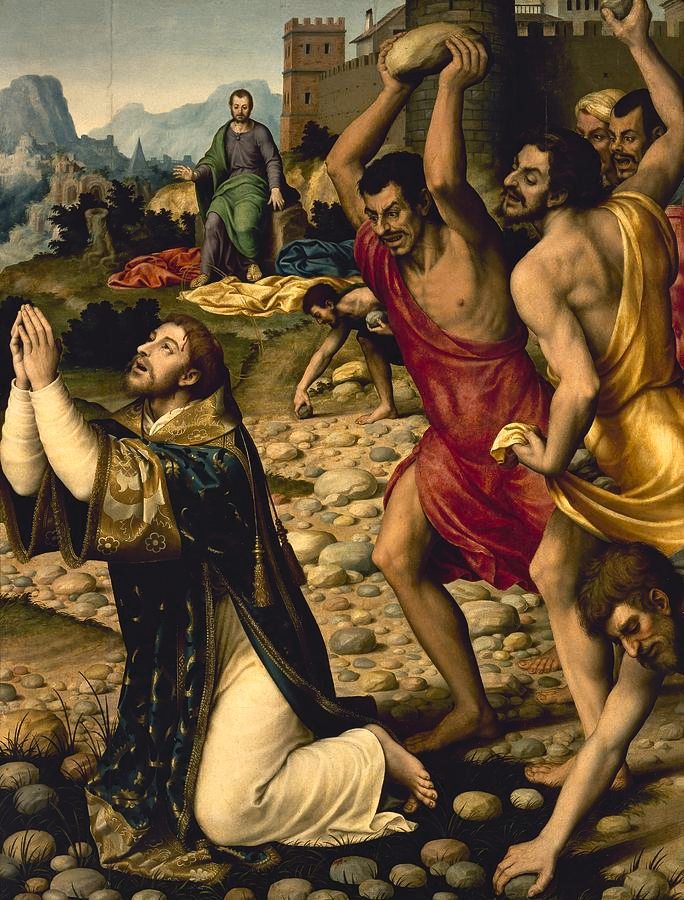
About two years after the resurrection, opposition turned to persecution (Acts 6:8ff). A believer named Stephen, who was intelligent and able to effectively argue for the Christian faith, was falsely accused of blasphemy and put on trial. His defense eventually angered those in attendance at the trial. They turned into a mob and stoned him to death (Acts 7:54ff). A Pharisee named Saul (later known as Paul the Apostle) who approved of the stoning began a persecution of the church.
Luke notes this about the results of Stephen’s death in Acts 8:1-5:
1 And Saul approved of his execution. And there arose on that day a great persecution against the church in Jerusalem, and they were all scattered throughout the regions of Judea and Samaria, except the apostles. 2 Devout men buried Stephen and made great lamentation over him. 3 But Saul was ravaging the church, and entering house after house, he dragged off men and women and committed them to prison. 4 Now those who were scattered went about preaching the word. 5 Philip went down to the city of Samaria and proclaimed to them the Christ. (Acts 8:1-5 ESV)
Pay attention to verse 4. What might seem like a bad thing – persecution, actually turned out to be a good thing – progress of the Good News.
What caused the Good News to move from Jerusalem out to Judea and Samaria, the next step in the Great Commission, was persecution. It scattered the Christians out of Jerusalem and into other regions, resulting in widespread evangelism to Samaria and other places. Without this persecution, many Christians may have been content to stay in Jerusalem and Judea.
It also resulted in the Good News being preached to Gentiles (Acts 11:19-21). Up to this point, most Christians were Jews. Philip goes to Samaria and so the Good News now begins to spread to Gentiles and they accept Christ in large numbers.
Acts Chapter 9: Conversion of Saul (33 AD)
It is 33 AD at the beginning of Acts 9. Saul is still persecuting believers. He gets permission to go to the city of Damascus to seek out and arrest believers. That is a long way from Jerusalem – about 130 miles, a six day journey by foot. The Good News had already spread far outside of Jerusalem, and had become a concern for the Jewish leaders.
On the way, Christ appears to Paul and he is blinded (Acts 9:1ff). God sends a believer named Ananias to heal his sight and Saul accepts Christ (Acts 9:10ff), and immediately begins to spread the Good News (Acts 9:20). Of course you know Saul by his Roman name Paul.
Paul played an important role in the growth and establishment of Christianity by planting churches throughout the Roman empire. And he continues to minister to us today through the Epistles that he wrote that make up about one quarter of the New Testament.
He was a Jewish Pharisee who strictly followed the Law. His zeal for Judaism is what led him to persecute Christians. But his encounter with Jesus on the road to Damascus turned him into a preacher for Jesus.
With Paul’s conversion, the church experienced a period of peace from persecution, during which it continued to spread the Good News, as described in Acts 9 to 11, which focus on Peters activities.
Acts Chapter 11: Antioch & Mission to Gentiles (44 AD)
In Acts 11, one specific city where the Good News was proclaimed is mentioned – Antioch, far north of Jerusalem in what is modern day Syria (see map below). Here is what Luke records about Antioch with my comments in square brackets:
19 Now those who were scattered because of the persecution that arose over Stephen traveled as far as Phoenicia and Cyprus and Antioch, speaking the word to no one except Jews. 20 But there were some of them, men of Cyprus and Cyrene [in north Africa], who on coming to Antioch spoke to the Hellenists [non-Jews who spoke Greek] also, preaching the Lord Jesus. 21 And the hand of the Lord was with them, and a great number who believed turned to the Lord. (Acts 11:19-21 ESV)
In Antioch many Greeks accepted Christ and it became an important center for Christianity. Because of the response, Paul was brought in to help.
25 So Barnabas went to Tarsus [see map below] to look for Saul, 26 and when he had found him, he brought him to Antioch. For a whole year they met with the church and taught a great many people. And in Antioch the disciples were first called Christians. (Acts 11:25-26 ESV)
Acts 11:26 tells us that believers were first called “Christians” at the city of Antioch.
As you read the Bible, you should always have a map handy so you can locate where the events you are reading about took place. You can also look up information in a Bible Dictionary or simply google it.
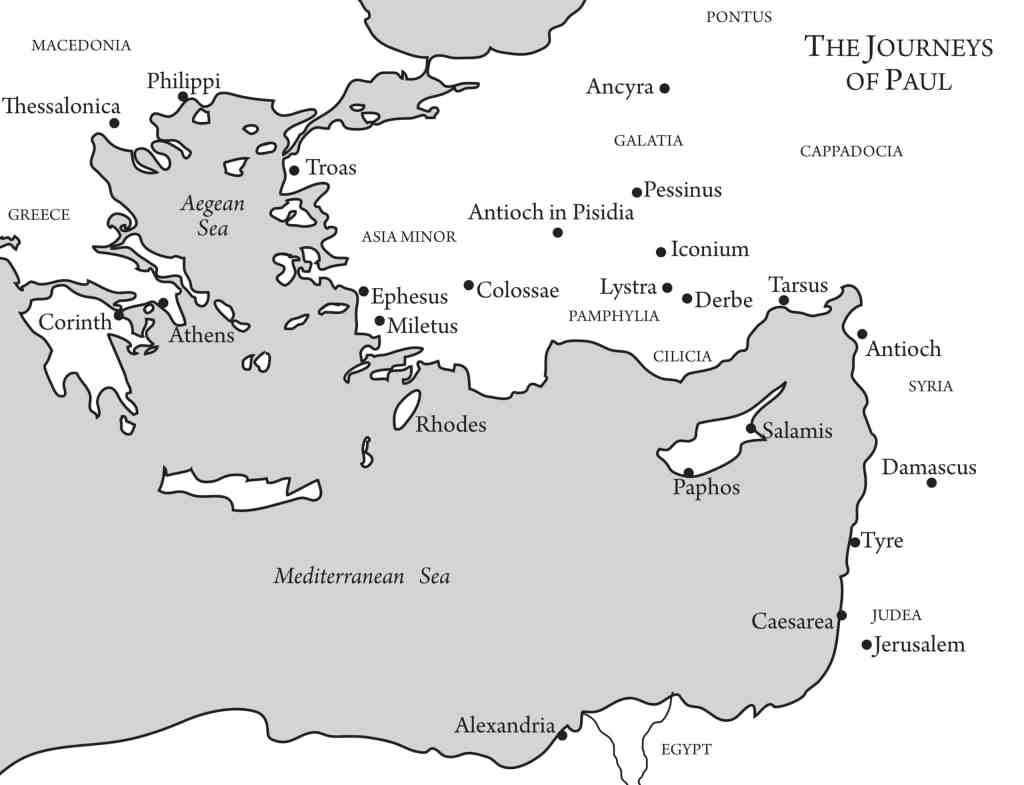
If you research Antioch you will discover the important fact that it was the third largest city in the Roman empire with an estimated population of 250,000 to 500,000 people. Rome was the largest city with about 1,000,000 people and Alexandria, Egypt was second with between 500,000 to 750,000 people.
The Good News was spreading out further and further from Jerusalem and to large urban centers.
Acts 12: A New Wave of Persecution / James is Martyred (44 AD)
Acts chapter 12 begins in the same year as the previous events in Antioch. About 10 years have passed since Paul’s conversion. A new wave of persecution begins with the execution of James, the brother of the Apostle John.
1 About that time Herod the king laid violent hands on some who belonged to the church. 2 He killed James the brother of John with the sword, 3 and when he saw that it pleased the Jews, he proceeded to arrest Peter also. (Acts 12:1-3 ESV)
Herod Agrippa I (ruled 41-44 AD), executed James and threw the Apostle Peter in Prison with the intention of executing him also. However, God sent an angel to open the prison doors at night while the guards were asleep and delivered Peter.
The focus of Acts up to this point has been Jerusalem, Judea, and Samaria. But beginning in chapter 13, the book shifts its focus to Paul and his three extensive missionary journeys “to the end of the earth”. I will pick up there in the next post.
Word Focus Lexicon
Lexical Form: Σαούλ, ὁ
Transliteration: Saoul
Gloss: Saul
Part of Speech: Indeclinable Masculine Proper Noun
New Testament Frequency: 9
Strong’s Number: G4549 (Link to Blue Letter Bible Lexicon)
Σαούλ / Saoul is a name of Hebrew origin. It was the name of the first king of Israel and Jewish name of the Apostle Paul.
Footnotes
[1] Dickson, John. A Doubter’s Guide to the Bible. (Grand Rapids: Zondervan, 2014 by John Dickson.) Page 176.
[2] Ibid., page180.
Bibliography
Balz, Horst and Schneider, Gerhard, Editors. Exegetical Dictionary of the New Testament. William B. Eerdmans Publishing Company, 1990.
Beetham, Christopher A., Editor. The Concise New International Dictionary of New Testament Theology and Exegesis. Zondervan Academic, 2021.
Bromiley, Geoffrey W. Theological Dictionary of the New Testament, Abridged in One Volume. William B. Eerdmans Publishing Company, 1985.
Bruce, F.F. Commentary on the Book of the Acts, The New International Commentary on the New Testament. Wm. B. Eerdmans Publishing Co., Reprinted 1984.
Carson, D. A. and Moo, Douglas J. An Introduction to the New Testament. Zondervan, 1992, 2005 by D. A. Carson and Douglas J. Moo.
Danker, Frederick William. The Concise Greek-English Lexicon of the New Testament. The University of Chicago Press, 2009.
Dickson, John. A Doubter’s Guide to the Bible. Zondervan, 2014 by John Dickson.
Gilbrant, Thoralf, International Editor. The New Testament Greek-English Dictionary. The Complete Biblical Library, 1990.
Gundry, Robert H. A Survey of the New Testament. Zondervan Publishing House, 1970.
Guthrie, Donald. New Testament Introduction. Inter-Varsity Press, 1970 by The Tyndale Press.
Liddell, Henry George and Scott, Robert. A Greek-English Lexicon. Oxford University Press. 1940. With a Supplement, 1996.
Marshall, I. Howard. The Acts of the Apostles, Tyndale New Testament Commentaries. William B. Eerdmans Publishing Company, 1980 by I. Howard Marshall.
Tenney, Merrill C. New Testament Survey. William B. Eerdmans Publishing Co., 1953, 1961, 1985.
Verbrugge, Verlyn D. New International Dictionary of New Testament Theology: Abridged Edition. Zondervan, 2000.
Vos, Howard F. Beginnings in the New Testament. Moody Press, 1973 by The Moody Bible Institute of Chicago
English translations of Bible verses marked (TBA) are translations by the author from the Greek text and are not quotations from any copyrighted Bible version or translation.
Scripture quotations marked (ESV) are from the Holy Bible, English Standard Version, copyright © 2001, 2007, 2011, 2016, 2025 by Crossway Bibles, a division of Good News Publishers. Used by permission. All rights reserved.
 Koine Foundations
Leave a comment